 How-to
Assessing Skincare Ingredient Sourcing: A Step-by-Step Guide
Quick Summary
To assess skincare ingredient sourcing, start by finding the full INCI list on the package, then identify which ingredients are botanical and which are synthetic. Next, ask the brand for a Certificate of Analysis or Material Safety Data Sheet and check for third-party certifications. A claim without documents is only marketing.
- Check the full INCI list on the box or product page before buying.
- Botanical names like Simmondsia chinensis show a plant source.
- Ask the brand for a Certificate of Analysis (COA) or MSDS.
- A COA lists test results for a specific batch, such as purity and contaminants.
- Vague claims like "ethical partners" are not enough without named suppliers.
Table of Contents
- Why Ingredient Sourcing Matters Before You Buy
- How to Read the INCI List for Sourcing Clues
- Step-by-Step: How to Assess Skincare Ingredient Sourcing at Home
- Evaluating Ethical Ingredient Sourcing for Skincare Brands
- What Sustainable Cosmetic Ingredients Look Like in Practice
- Spotting Greenwashing, Supplier Audits, and Digital Verification Tools
- Start Checking Your Routine: How Soulari Naturals Shows Its Sourcing
- Frequently Asked Questions
Assessing Skincare Ingredient Sourcing: A Step-by-Step Guide
Last Updated: November 15, 2026
Why Ingredient Sourcing Matters Before You Buy
Soulari Naturals built its botanical clean standard around one question: where does each ingredient come from? Market.us reports that 52% of consumers actively seek skincare products with recognizable ingredients (Market.us skincare statistics report). That preference is growing fast. Fortune Business Insights projects the global skincare market to grow from $129.11 billion in 2026 to $227.13 billion by 2034 (Fortune Business Insights skincare market analysis).
Sourcing is the part of the label that most shoppers never see. It tells you whether a plant was grown, wild-harvested or made in a lab. It also tells you whether the company knows its supply chain well enough to prove it.
Sourcing matters for three reasons:
- Ingredient quality: Where and how a plant is grown affects its purity.
- Sensitivity: Knowing an ingredient's origin helps you spot likely triggers.
- Honesty: Clear sourcing shows a brand has nothing to hide.
Sensitive skin needs extra care. A label that names its botanicals is easier to check than one that hides behind "fragrance" or "proprietary blend."
How to Read the INCI List for Sourcing Clues
The INCI list is the official ingredient list printed on the package. INCI stands for International Nomenclature of Cosmetic Ingredients. Ingredients appear in order of concentration, from highest to lowest.
Look for these clues:
- Botanical names: A name like Simmondsia chinensis (jojoba) points to a plant source.
- Plant part: Words like "seed oil," "leaf extract" or "root" show which part was used.
- Full disclosure: Every ingredient should appear. Watch for vague catch-all terms.
Keep one point in mind. The INCI list tells you what is in the bottle. It does not always tell you where the ingredient was grown. You will need documents for that answer, covered in the steps below.
Step-by-Step: How to Assess Skincare Ingredient Sourcing at Home
Work through these steps in order. Each one builds on the last.
- Find the full INCI list. Check the box or the product page. If it is missing, stop there.
- Identify botanical versus synthetic ingredients. Note which names are plant-derived.
- Look for supplier documents. Ask for a Certificate of Analysis (COA) or Material Safety Data Sheet (MSDS).
- Check for third-party certifications. Look for an independent seal that the brand can name.
- Compare claims with evidence. A claim without proof is only marketing.
Checking Botanical vs. Synthetic Origins
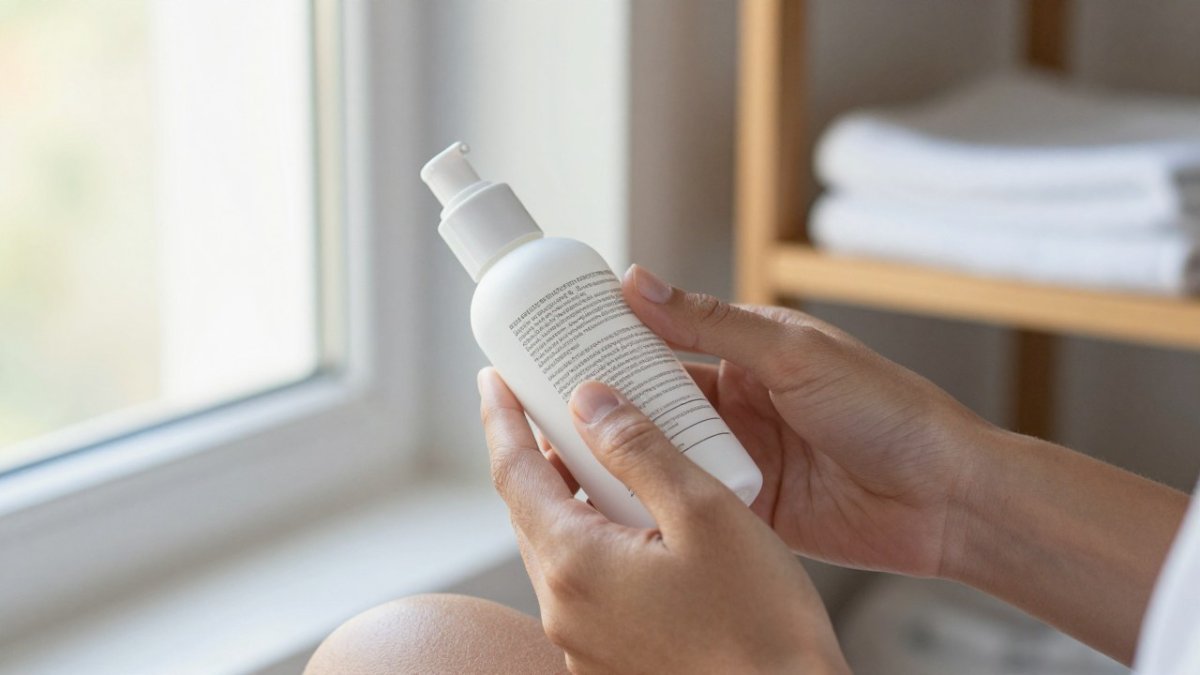
Botanical ingredients come from plants, minerals or other natural sources. Synthetic ingredients are made in a lab or factory. Neither is automatically better. The question is whether the origin is clear.
A quick test: if a label says "plant-derived" but lists no plant name, ask the brand which species it uses. Honest brands answer quickly. Vague answers are a warning sign.
Reviewing COA and MSDS Documentation
A Certificate of Analysis (COA) is a document from the supplier. It lists test results for a specific batch, such as purity and contaminant levels. A Material Safety Data Sheet (MSDS, also called an SDS) describes an ingredient's hazards and handling.
Ask the brand for both. A brand with strong traceability will supply them on request. If it cannot, that tells you something about its supply chain.
The five steps below run in order, and each one builds on the last.
| Step | What to do | Time or frequency |
|---|---|---|
| 1. Find the full INCI list | Check the box or product page | Before buying |
| 2. Identify botanical vs synthetic | Note which names are plant-derived | Per product |
| 3. Look for supplier documents | Request a COA or MSDS | On request |
| 4. Check third-party certifications | Look for an independent seal the brand can name | Per product |
| 5. Compare claims with evidence | A claim without proof is only marketing | Ongoing |
Evaluating Ethical Ingredient Sourcing for Skincare Brands
Ethical sourcing means the people and land behind an ingredient were treated fairly. Researchers have raised concerns about this area. A critical analysis on ResearchGate examines the ethical and environmental questions tied to organic ingredient sourcing (ResearchGate analysis of organic skincare ingredient sourcing ethics).
Look for these signs of ethical sourcing:
- Named growers or farming regions
- Fair-trade or similar third-party certification
- Clear statements on wild-harvesting limits
- Willingness to share supplier information
A brand should be able to name its suppliers' practices. Vague promises about "ethical partners" are not enough.
What Sustainable Cosmetic Ingredients Look Like in Practice
Sustainable ingredients are grown or made with lower environmental harm. A 2026 Wiley Online Library project outline describes a structured approach to choosing sustainable cosmetic ingredient alternatives, covering selection, screening and formulation testing (Wiley Online Library outline on sustainable cosmetic ingredient alternatives).
In practice, sustainable sourcing often shows up as:
- Renewable plant crops instead of scarce wild species
- Shorter supply chains with fewer middlemen
- Packaging and sourcing choices that are disclosed openly
Sustainability claims need the same proof as any other claim. Ask what the brand measures and how.
Spotting Greenwashing, Supplier Audits, and Digital Verification Tools
Greenwashing is when a brand makes a green claim it cannot back up. The fix is not a better slogan; it is a paper trail. Paula's Choice, for example, describes a testing process that includes repeat insult patch testing and safety-in-use testing to check product safety (Paula's Choice safety testing process). Process details like these make a brand's claims easier to test.
A Practical Supplier Audit Framework
Most sourcing guides tell you to "audit your suppliers" without saying what an audit actually contains. Use this four-part framework when vetting a new supplier or re-qualifying an existing one.
- Document audit (desk review). Request the current COA, SDS, specification sheet, and, for botanicals, the plant's Latin binomial, plant part, and country of origin. Cross-check that the COA batch number matches the shipment and that the test methods are named (for example, HPLC or GC-MS for identity, microbial limits for bioburden).
- Facility and process audit. Confirm GMP status, pest control, allergen segregation, and change-control procedures. Ask how the supplier notifies you of a process change; a supplier that cannot describe a change-notification workflow is a continuity risk.
- Traceability audit. Walk one ingredient backward from finished lot to farm or synthesis batch. Record the number of intermediaries. Each handoff is a point where documentation can break.
- Re-qualification cadence. Set a review interval (many practitioners use annual desk reviews with on-site audits every two to three years) and define trigger events, a failed COA, a country-of-origin change, or a geopolitical disruption, that force an out-of-cycle audit.
Keep the output as a scored checklist rather than a narrative report. A simple pass/fail per line item makes it easy to compare two suppliers side by side and to show a retailer or auditor why you chose one over the other.
Digital Verification Tools for B2B Sourcing
Consumer-facing ingredient checkers are common; professional-grade verification is where the gap sits. The tools worth asking about fall into three buckets:
- Batch-level document portals. Supplier platforms that attach the COA and SDS to a specific lot number, so you can retrieve the exact document for the material in your warehouse rather than a generic spec sheet.
- Supplier-risk and compliance databases. Subscription services that screen suppliers for sanctions, forced-labor flags, and certification status. These are the B2B equivalent of a background check.
- Blockchain or serialized traceability pilots. A small number of botanical suppliers now issue lot-level digital records that follow an ingredient from harvest to delivery. Treat these as a bonus, not a substitute for the desk audit above.
Ask the brand or supplier which system it uses and whether you can query a lot number yourself. If the answer is "we keep that internally," you have learned something about its traceability.
Greenwashing Red Flags
- Vague language. Words like "clean" or "natural" have no fixed legal meaning, so check the details behind them.
- Certification without a certificate number. A real seal can be verified with the issuing body.
- Origin claims with no country named. "Sourced responsibly" is not an origin.
- No re-qualification policy. A supplier relationship with no review cadence is a claim, not a system.
For a practical checklist, read our guide on how to identify greenwashing in beauty products. For a deeper look at supplier networks, see how to research ethical beauty supply chains.
Watch out: Do not assume "natural" means safe or sustainable. A botanical can still be harvested unsustainably or irritate sensitive skin, and a supplier audit that only checks sustainability credentials can miss a contaminant or allergen risk entirely.
Start Checking Your Routine: How Soulari Naturals Shows Its Sourcing
Soulari Naturals publishes full INCI lists with no hidden formulas, so you can check every ingredient on your own.
Start with the label on your current products. Note which ingredients are botanical and which are synthetic. Then ask your brands for their documents. Use our six-step checklist for judging whether a skincare brand is truly clean to guide your review.
Ready to see the standard in practice? Shop Skincare and check the full ingredient list for yourself.
Frequently Asked Questions
How can I analyse the ingredients in my skincare products?
Start with the INCI list on the packaging, which names ingredients in descending order of concentration above about 1%. Look up unfamiliar names to see whether they are botanical extracts, plant-derived, or synthetic. Then check whether the brand publishes a full INCI list online, supplier documentation, or third-party test results. A product that names its botanicals with their Latin names and discloses their origin gives you far more to assess than one that lists only generic terms like 'plant extract'.
How do I check where skincare ingredients come from?
Brands rarely print country of origin on labels, so you need to ask or look. Check the brand's website for a sourcing or ingredients page, and look for supplier information, traceability statements, or Certificates of Analysis (COA) that identify the batch and origin. If a brand cannot or will not name where its botanicals are grown or harvested, treat that as a gap in transparency. Current pricing and sourcing details for Soulari Naturals products are available on its website.
What should I look for when assessing skincare ingredient sourcing?
Focus on four things: the completeness of the INCI list, the availability of supplier documentation such as COAs and Material Safety Data Sheets (MSDS), evidence of third-party testing for contaminants and allergens, and specific, verifiable sustainability claims. Vague phrases like 'ethically sourced' without supporting detail are weaker signals than named suppliers, certifications with public registries, or disclosed sourcing regions. Consider the brand's willingness to share this information as part of the assessment.
How can I spot greenwashing in skincare sourcing claims?
Greenwashing often shows up as 'naturally derived' or 'botanical' claims that are not backed by documentation. Note that a 'naturally derived' ingredient can still be processed with synthetic steps, so the claim needs boundary testing and clear definitions to hold up. Ask for the basis of the claim, check whether certifications are current and verifiable, and be cautious of sustainability language that cannot be tied to a specific supplier, practice, or measurable outcome.