 How-to
7 Steps to a Natural Skincare Routine for Adult Hormonal Acne
Last Updated: November 4, 2026
Quick Summary
A natural skincare routine for adult hormonal acne works best when it is simple and consistent: gentle cleansing, a non-comedogenic moisturizer and daily sunscreen, with targeted treatment only two to three times per week. Start with these basics for two weeks, then add one new product at a time. Natural ingredients can soothe skin and reduce surface oil, but they do not cure deep, hormonal cysts.
- Start with a gentle cleanser, moisturizer and sunscreen for two weeks before adding actives.
- Use targeted treatments two to three times per week rather than every night.
- Introduce one new product about every two weeks so you can see what helps or irritates.
- Patch-test new products on your jaw or behind the ear for three to four days.
- See a dermatologist if breakouts are deep, painful or not improving after several months.
Table of Contents
- What Hormonal Acne Is and How It Shows Up in Adults
- Telling Hormonal Acne Apart From Other Adult Breakouts
- A Natural Skincare Routine for Adult Hormonal Acne at Home
- Patch Testing and Introducing New Products Safely
- What Natural Ingredients Can and Cannot Do for Hormonal Acne
- Dermatologist-Recommended Routine Principles for Hormonal Acne
- Treating Hormonal Acne Scars and Marks With a Natural Routine
- Booking Your Next Step: Choosing a Routine That Fits Your Skin
- Frequently Asked Questions
What Hormonal Acne Is and How It Shows Up in Adults
Hormonal acne is breakouts driven by shifts in hormones, especially androgens, that push the oil glands to make more sebum. Adult hormonal acne tends to show up along the jawline, chin and lower cheeks, and it often flares before a period or during stressful stretches. Unlike the teenage breakouts many of us remember, it can linger for years.
Clinical guidance describes adult female acne as a condition that needs a steady, patient approach. A clinical practice guide on adult female acne reviews how treatment is usually built around consistent, gentle care rather than harsh quick fixes.
Common signs include:
- Deep, tender bumps along the jaw and chin
- Breakouts that return each month around the same time
- Redness or dark marks that stay after a pimple heals
- Dry or irritated skin from over-treating
Telling Hormonal Acne Apart From Other Adult Breakouts
Not every adult breakout is hormonal. Stress, friction from phones or masks, heavy products and certain medications can all cause bumps that look similar.
A few clues can help you tell them apart:
- Location: Hormonal breakouts cluster on the lower face. Friction breakouts follow where things touch the skin.
- Timing: Hormonal breakouts often repeat in a monthly pattern.
- Type: Deep, painful cysts point more toward hormones. Small whiteheads often point toward clogged pores.
If your pattern is unclear, or breakouts are severe, a doctor or dermatologist can help sort out the cause. That matters because treatment depends on the cause.
A Natural Skincare Routine for Adult Hormonal Acne at Home
A natural routine for adult hormonal acne works best when it is simple, sequenced, and consistent. A Vitamin C serum for a brighter, more even-toned look can be a simple daily addition once your basics are stable. The goal is to support the skin barrier, reduce congestion, and avoid the irritation that can trigger more breakouts. Below is a practical order you can follow, with frequency guidance and a simple way to adjust if your skin reacts.
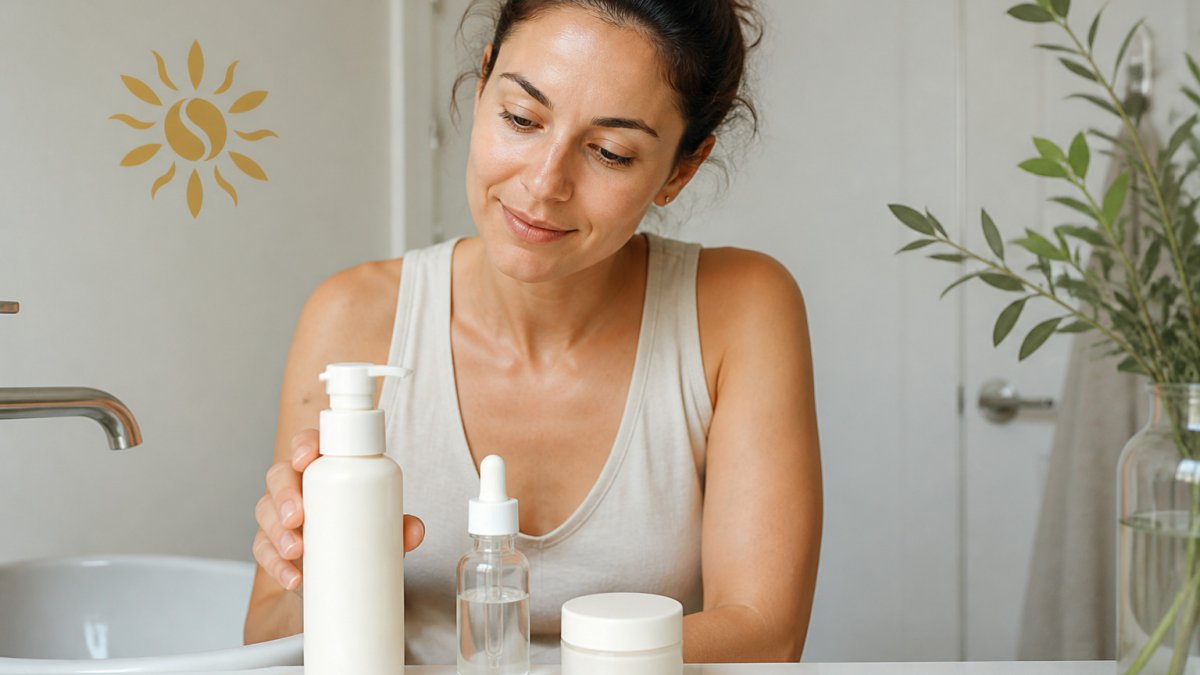
Morning Steps: Gentle Cleansing, Antioxidants and Protection
- Cleanse gently. Use a mild, plant-based cleanser with lukewarm water. Avoid foaming cleansers with strong surfactants if your skin feels tight after washing. Pat dry with a clean towel.
- Apply a light antioxidant serum (optional). Introduce it only after your cleanser and moisturizer are stable for at least two weeks.
- Moisturize. Choose a non-comedogenic moisturizer with ingredients like glycerin, squalane, or aloe. Dryness can make acne look worse and can lead to more oil production.
- Protect with sunscreen. Use a broad-spectrum sunscreen every morning.
Evening Steps: Cleansing, Targeted Care and Recovery
- Remove sunscreen and oil. A clarifying cream for scalp, back and face is one option for an evening step that helps skin feel clean and smooth. If you wear sunscreen or makeup, start with an oil-based cleanser or micellar water, then follow with your gentle water-based cleanser. This double cleanse helps remove pore-clogging residue without stripping the skin. For a deeper weekly step, activated charcoal and clay masks are formulated to help draw out impurities and refine the look of pores.
- Use a targeted treatment two to three times per week. Do not exfoliate every night; two or three times weekly is enough for most people.
- Moisturize again. Apply a non-comedogenic moisturizer to damp skin to lock in hydration and support the barrier overnight.
- Spot-treat only if needed. Test it first and avoid applying it to large areas.
How to Adjust the Routine
Start with the basic three steps, cleanser, moisturizer, sunscreen, for two weeks before adding any active. Introduce one new product at a time, about two weeks apart, so you can tell what helps and what irritates. If your skin stings, flakes, or feels tight, cut back on exfoliation and focus on cleansing and moisturizing.
Watch out: over-exfoliating or layering multiple actives can strip the skin barrier and trigger more breakouts, so keep the routine simple and introduce changes slowly.
The article lays out a simple order for morning and evening care, with frequencies to follow.
| Step | What to do | Frequency or time |
|---|---|---|
| Morning cleanse | Gentle, plant-based cleanser with lukewarm water | Every morning |
| Morning moisturize | Non-comedogenic moisturizer | Every morning |
| Sun protection | Broad-spectrum sunscreen | Every morning |
| Evening double cleanse | Oil-based cleanser or micellar water, then gentle cleanser | Every evening if wearing sunscreen or makeup |
| Targeted treatment | Targeted treatment on the affected areas | Two to three times per week |
| Evening moisturize | Non-comedogenic moisturizer on damp skin | Every evening |
| Introduce new products | Start basic three steps, then add one product at a time | Start with two weeks of basics; about two weeks apart |
Patch Testing and Introducing New Products Safely
Test every new product before using it on your whole face. Dab a small amount on your jaw or behind the ear for three to four days.
Introduce one new product at a time, about two weeks apart. This makes it clear what helps and what irritates.
What Natural Ingredients Can and Cannot Do for Hormonal Acne
Natural ingredients can be part of a routine, but they are not a cure for hormonal acne. A useful way to think about them is by what they can realistically do: soothe, reduce surface oil, and help with the look of post-breakout marks. They are less reliable for deep, painful cysts driven by hormones.
Here is a practical breakdown of common natural ingredients, what evidence suggests, and safety limits:
- Tea tree oil: It can irritate the skin, so dilute it and patch-test first. Avoid applying it to large areas.
- Green tea: Evidence is limited, and it is best used as a supporting ingredient rather than a standalone treatment.
- Alpha hydroxy acids (AHAs): Use them two to three times per week and always with sunscreen.
- Aloe vera: Soothing and hydrating, useful for calming irritated skin, but not a treatment for active acne.
- Clay masks: Can temporarily reduce surface oil and refine the look of pores, but overuse can dry the skin and trigger more oil production.
Natural does not automatically mean safe or effective. Some botanical ingredients, including essential oils, can cause contact dermatitis or make acne worse. Patch-test every new product and introduce one at a time. For deep, painful, or persistent hormonal acne, a doctor or dermatologist can advise on treatments that have stronger evidence, including prescription options.
Dermatologist-Recommended Routine Principles for Hormonal Acne
Dermatology guidance tends to repeat the same core principles: gentle cleansing, non-irritating moisturizer, sun protection and patience. Research reviews on acne treatment describe the field as review of acne treatment research progress, with ongoing work into new approaches.
Keep expectations realistic. Most changes take several weeks, so track your skin with photos once a week.
Treating Hormonal Acne Scars and Marks With a Natural Routine
Marks left after breakouts usually fade slowly. A papaya-based cream aimed at lightening dark spots is one product designed for that concern. Tired, irritated skin around the eyes can benefit from a gentle, plant-based eye roll-on essence with light hydration.
Booking Your Next Step: Choosing a Routine That Fits Your Skin
Start small. Building a natural skincare routine around a gentle cleanser, a moisturizer and sunscreen, then adding one active at a time, works best. If breakouts are deep, painful or not improving after several months, see a dermatologist.
At Soulari Naturals, we think a simple routine built on clean, botanically formulated products is the easiest place to begin. Explore our skincare range and choose the steps that fit your skin.
Frequently Asked Questions
What is the best skincare for adult hormonal acne?
There is no single best product, because hormonal acne depends on the individual's skin type and severity. A gentle, non-comedogenic cleanser, a lightweight moisturizer and sun protection form the base of most routines. Introduce one product at a time and patch test first. If breakouts persist after several months, a dermatologist can recommend treatments such as topical retinoids or other prescription options.
Can natural skincare clear hormonal acne?
Natural skincare can support clearer skin by reducing irritation and keeping pores clean, but it is unlikely to clear hormonal acne on its own in every case.
How long does it take for a skincare routine to improve hormonal acne?
Most people need several weeks of consistent use before judging a routine, and visible change can take longer. The research available for this article does not give a single timeline for natural routines. Track breakouts, irritation and skin texture in a simple log, changing one variable at a time. If you see no improvement after a few months, or if breakouts become painful or leave scarring, book an appointment with a dermatologist.
Should I see a dermatologist for adult hormonal acne?
Yes, a dermatologist is worth consulting if breakouts are painful, deep, widespread, or not improving with a consistent routine. A clinician can confirm whether hormones or another condition are involved and recommend treatments that a skincare routine cannot provide. A professional can help you match options to your situation. Bring a record of your routine and any products you have tried.