 blog
How Do You Spot Hidden Synthetic Fragrance?
Last Updated: October 25, 2026
Quick Summary
Hidden synthetic fragrance appears on labels under catch-all terms like fragrance or parfum, which can represent more than 3,500 undisclosed chemicals without individual ingredient names. Spot hidden synthetic fragrance by scanning ingredient lists for these umbrella terms, checking ingredient placement by concentration, and prioritizing products labeled fragrance-free rather than unscented.
- A single fragrance entry can hide an average of four hormone-disrupting ingredients per product according to Campaign for Safe Cosmetics research.
- Fragrance-free means no fragrance was added; unscented means fragrance was added then masked with another fragrance to hide the smell.
- Named botanical sources like rose oil or lavender extract are safer choices because fragrance sources are disclosed individually in the INCI list.
- Fragrance reactions include skin itching, redness, contact dermatitis, respiratory symptoms, headaches, and brain fog within minutes to hours of exposure.
- Audit laundry detergents, household cleaners, shampoos, and air fresheners alongside skincare since hidden fragrance in these products can undermine a fragrance-free routine.
Table of Contents
- What Synthetic Fragrance and Parfum Actually Mean
- Why Fragrance Ingredients Hide Behind a Single Label
- How to Read Skincare Ingredient Labels for Fragrance
- Fragrance-Free vs Unscented: What the Labels Really Say
- Parfum in Skincare: Synthetic vs Natural and What You Need to Know
- Fragrance Allergens in Cosmetics and Common Health Reactions
- Building Your Clean Skincare Routine Without Hidden Fragrance
- Frequently Asked Questions
What Synthetic Fragrance and Parfum Actually Mean
Synthetic fragrance is a manufactured scent made from chemical compounds rather than plants. Parfum (or "perfume") is the concentrated form, typically containing the highest percentage of fragrance oils.
When you see "fragrance" or "parfum" listed on a skincare or cosmetic label, it's a catch-all term. This single word can represent a mixture of more than 3,500 chemicals, according to Environmental Working Group's fragrance analysis.
Fragrance compounds are common because they mask unpleasant smells and make products feel luxurious. The trade-off: hidden synthetic fragrance means hidden exposure to chemicals you may not want on your skin.
Why Fragrance Ingredients Hide Behind a Single Label
The fragrance industry operates under a loophole: manufacturers can list all fragrance components under one umbrella term, "fragrance" or "parfum", without naming individual chemicals.
Why does this matter?
The result: skincare companies can include synthetic fragrance without transparency, and you don't know what you're exposing your skin to.
At Soulari Naturals, we believe ingredient transparency is non-negotiable. Our botanical clean standard means every ingredient, including fragrance sources, is listed in full INCI format with no hidden formulas.
How to Read Skincare Ingredient Labels for Fragrance
The INCI (International Nomenclature of Cosmetic Ingredients) list is your best tool for spotting hidden synthetic fragrance, but it has limits.
Step 1: Know where fragrance hides
Start by scanning for the obvious terms, then look for the less obvious ones:
- "Fragrance" or "parfum", the catch-all terms. Either one signals a fragrance blend, and the manufacturer is not required to disclose its components.
- "Aroma", used in some regions and on some food-adjacent products; treat it the same as fragrance.
- Fragrance-adjacent chemicals that often appear separately but work alongside a fragrance blend:
- Diethyl phthalate (DEP), sometimes used as a solvent in fragrance
- Synthetic musks (galaxolide, tonalide)
- Formaldehyde-releasing preservatives (DMDM hydantoin, imidazolidinyl urea), preservatives, not fragrance, but worth noting if you are sensitive
Step 2: Read the order, not just the presence
INCI lists ingredients by concentration, highest to lowest. A fragrance in the first five ingredients is a major component; one listed after the preservatives is present in a small amount. Placement tells you how much exposure to expect.
Step 3: Understand the limits of the label
A short ingredient list does not mean fewer chemicals. A single "fragrance" entry can represent dozens of undisclosed compounds under the trade-secret exemption. The label can tell you fragrance is present, but not exactly what is in it.
Step 4: Fragrance-free versus unscented, the distinction that matters
- Fragrance-free means no fragrance has been added. The product may still smell from other ingredients, but no synthetic or natural fragrance was intentionally included. This is generally safer if you are sensitive to fragrance.
- Unscented means fragrance may have been added, then masked with another fragrance to neutralize the smell. The fragrance is still there, you just cannot smell it.
Prioritize products labeled "fragrance-free." If a label uses neither term, assume fragrance may be present.
Step 5: Look beyond skincare
Hidden fragrance is not limited to moisturizers and serums. Common everyday sources include:
- Laundry detergents, fabric softeners, and dryer sheets
- Household cleaners and dish soap
- Air fresheners, candles, and diffusers
If you are tracking symptoms, audit these products alongside your skincare. A fragrance-free skincare routine can be undermined by a scented laundry detergent or plug-in air freshener.
Step 6: Cross-reference marketing claims with the ingredient list
Marketing language is not regulated the same way as the INCI list.
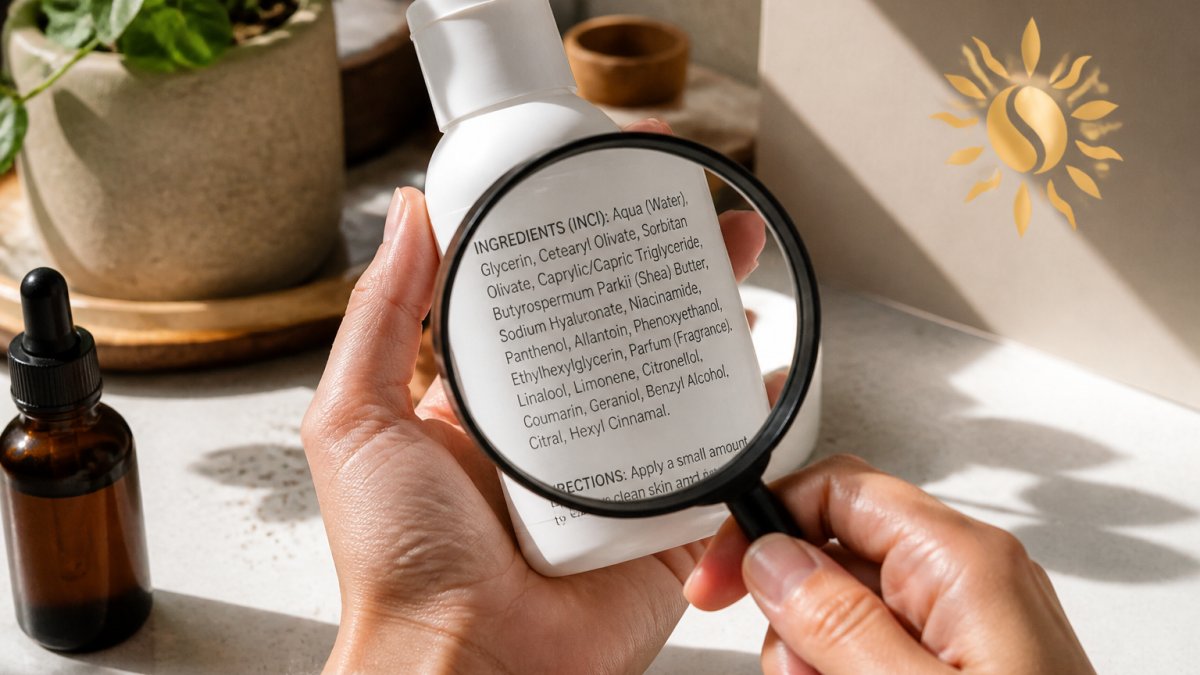
Reading labels improves with practice.
Fragrance hides under several terms on ingredient labels, and understanding where to look helps you spot hidden synthetic chemicals.
| Term or Chemical | What It Means | What to Do |
|---|---|---|
| Fragrance or Parfum | Catch-all for undisclosed fragrance blend | Assume hidden chemicals; avoid if sensitive |
| Aroma | Regional term for fragrance blend | Treat same as fragrance or parfum |
| Named botanicals (rose oil, lavender extract) | Disclosed fragrance sources | Safer choice; you know what's included |
| Fragrance-free | No fragrance added intentionally | Prioritize this label if sensitive |
| Unscented | Fragrance added then masked with another fragrance | Avoid; fragrance exposure still present |
| Diethyl phthalate (DEP) | Solvent sometimes used in fragrance | Note if present alongside fragrance term |
| Synthetic musks (galaxolide, tonalide) | Fragrance-adjacent chemicals | Often appear separately but work with fragrance |
Fragrance-Free vs Unscented: What the Labels Really Say
These two terms sound identical but they're not. Understanding the difference protects you from misleading marketing.
Fragrance-free means no fragrance has been added to the product.
Unscented means fragrance was added to the product, but then a masking fragrance was layered on top to neutralize the smell.
The distinction matters because "unscented" products still contain hidden synthetic fragrance.
When shopping, prioritize products labeled "fragrance-free." If a label doesn't use either term, assume fragrance is present.
Parfum in Skincare: Synthetic vs Natural and What You Need to Know
Parfum typically contains 15-40% fragrance oils, the most concentrated form. Eau de parfum contains 15-20%, eau de toilette 5-15%, and body lotions and skincare products usually 1-3%.
Synthetic parfum is created in a lab; natural parfum comes from plant extraction. Both can irritate skin, the source doesn't determine safety, the individual chemicals do.
Research has suggested that synthetic perfumes may potentially affect the endocrine-immune-neural axis, according to a 2023 review in the NIH's PMC database.
Fragrance Allergens in Cosmetics and Common Health Reactions
Fragrance is one of the most frequently reported causes of cosmetic contact allergy, with reactions on the skin, in the airways, or whole-body. None of these signs is unique to fragrance, so notice patterns across exposure route and timing rather than self-diagnosing from a single symptom.
A practical symptom checklist by exposure route and timing
Use this as an observation tool, not a diagnosis. Note what you felt, where, and how soon after exposure.
Skin contact (leave-on products: moisturizers, serums, sunscreens)
- Itching, burning, or stinging within minutes of application
- Redness, flushing, or a warm sensation in the application area
- Contact dermatitis: raised, inflamed, sometimes weeping patches
Skin contact (rinse-off products: cleansers, shampoos, body wash)
- Symptoms may be milder or delayed because contact time is short
- Scalp itching, flaking, or tightness after washing
- Body-wide itching after showering, especially in hot water
Inhalation (sprays, candles, diffusers, scented laundry, personal care)
- Sinus congestion, sneezing, or a scratchy throat within minutes to an hour
- Coughing, wheezing, or chest tightness, seek medical advice if breathing is affected
- Worsening of existing asthma symptoms after exposure
Whole-body or neurological (often after cumulative or inhaled exposure)
- Headache or migraine triggered within 30-60 minutes of exposure
- Difficulty concentrating or "brain fog"
- Nausea or lightheadedness in a scented room
Timing is a clue, not a verdict
A reaction within 15-30 minutes of applying a leave-on product points more strongly toward that product. Symptoms building over hours or days are harder to pin down, they may reflect cumulative exposure or an unrelated cause. People often blame the most recent product when the real trigger is a laundry detergent or shampoo used for months.
How to tell fragrance sensitivity from other causes
Fragrance reactions are nonspecific, the same redness, itching, or headache can come from preservatives, surfactants, dust, pollen, stress, or temperature changes. Before blaming fragrance, consider these confounders:
- Other cosmetic ingredients: preservatives (such as methylisothiazolinone), surfactants, and some plant extracts can cause similar contact dermatitis.
- Environmental triggers: pollen, dust mites, mold, and dry indoor air can mimic fragrance sensitivity.
- Product interactions: a new product used alongside an old one can create irritation neither causes alone.
A simple exposure diary helps separate these. For two to four weeks, record:
- Products used (including laundry detergent, cleaners, and air fresheners, not just skincare)
- Time of use and time symptoms appeared
- Symptom type, location, and severity
- Anything else that changed that day (weather, stress, new foods, travel)
If symptoms consistently track with a specific product or environment, discuss it with a clinician. Persistent, severe, or breathing-related symptoms warrant medical evaluation, a dermatologist or allergist can patch test for specific allergens, including fragrance mix and individual fragrance components.
What is well established versus uncertain
It helps to separate what is well documented from what is still debated:
- Well established: fragrance ingredients are a common cause of allergic contact dermatitis, and some individuals experience respiratory irritation or headaches after exposure. Regulatory bodies in the EU require disclosure of 26 specific fragrance allergens above certain concentrations in cosmetics.
- Plausible but less certain: associations between synthetic fragrance exposure and broader hormonal or immune effects. Reviews, including a 2023 review in the NIH's PMC database 2023 review on synthetic fragrance and the endocrine-immune-neural axis, suggest possible mechanisms, but this is an area of ongoing research rather than settled causation.
- Uncertain or overstated: claims that a single fragrance exposure causes chronic disease. Most evidence points to irritation and allergy as the clearest risks, with longer-term effects still being studied.
This distinction matters because it keeps the focus on practical steps, reducing exposure where you can, tracking symptoms, and seeking care when needed, without overstating what the science currently shows.
Building Your Clean Skincare Routine Without Hidden Fragrance
A fragrance-free routine starts with reading labels obsessively until you know which brands are transparent. The goal: eliminate hidden synthetic fragrance while keeping products that work for your skin.
Step 1: Audit what you're using now
- Pull out every skincare product
- Check each label for "fragrance" or "parfum"
- Note which products contain fragrance and which don't
Step 2: Replace fragranced products one at a time
- Don't overhaul your entire routine at once
- Swap one product per week so you can identify what works
- Start with products touching sensitive areas (around eyes, on lips), then move to moisturizers and cleansers
Step 3: Prioritize transparent brands Look for companies that list fragrance sources by name or avoid fragrance entirely. Ingredient transparency is the baseline. Verify Clean Beauty Ingredient Transparency: A Step-by-Step Guide walks you through checking a brand's actual disclosure practices.
Step 4: Choose plant-based alternatives If you want a scented product, choose one where fragrance sources are named individually (rose oil, lavender extract, citrus peel oil). You'll know exactly what you're getting. Best Clean Skincare Brands With Full Ingredient Transparency highlights brands committed to this standard.
Step 5: Add pure botanical oils if you want scent Pure jojoba oil, rosehip oil, or other plant oils can be layered under fragrance-free skincare to add subtle scent without hidden chemicals. Aura Cacia - Jojoba Natural Skin Care Oil - 4 Fl Oz is one example of a pure botanical option explicitly free from synthetic fragrance.
The shift to fragrance-free skincare takes time. Your skin may adjust over a few weeks, and many people report that sensitivity decreases once they eliminate hidden synthetic fragrance exposure.
Frequently Asked Questions
How can you tell if a skincare product contains hidden synthetic fragrance?
Check the ingredient list for the terms 'fragrance' or 'parfum', these are the primary red flags for hidden synthetic fragrance. Fragrance can contain a mixture of more than 3,500 chemicals, but manufacturers only need to list it as one word. Look for these terms anywhere in the INCI (International Nomenclature of Cosmetic Ingredients) list, not just at the top. If a product smells strong but doesn't list fragrance, check for essential oils or botanical extracts that may provide scent. Products labeled 'fragrance-free' should have neither term present.
What is the difference between fragrance-free and unscented skincare?
Fragrance-free means no fragrance or parfum has been added to the product. Unscented can be misleading: it means a masking fragrance was added to hide the product's natural smell, so synthetic chemicals are still present. For sensitive skin, fragrance-free is the safer choice. Always check the ingredient list, unscented products will still list fragrance or parfum on their INCI, while truly fragrance-free products will not.
Does parfum on an ingredient label mean synthetic fragrance?
Parfum (or 'fragrance' in English labels) typically indicates a fragrance mixture, which is usually synthetic or semisynthetic. However, parfum can technically include natural essential oils blended with synthetic carriers. The term itself doesn't distinguish between natural and synthetic sources. If you want to avoid all fragrance, synthetic or natural, look for products with neither 'fragrance' nor 'parfum' listed. Soulari Naturals uses full INCI transparency, so you can verify exactly what's in your skincare without hidden fragrance labels.
What health effects can hidden fragrance chemicals cause?
Fragrance exposure can trigger skin irritation, allergic reactions including contact dermatitis, itching, and redness. Respiratory symptoms like asthma, throat irritation, and sinus irritation are common, particularly with lingering scent in enclosed spaces. Headaches and migraines are frequently reported. A 2010 study found an average of four hormone-disrupting ingredients in 17 fragrances tested, including synthetic musks and diethyl phthalate, raising concerns about endocrine effects. If you experience these symptoms after using a scented product, switch to fragrance-free alternatives and consult a dermatologist if reactions persist.
Fragrance sensitivity is real, and so is the chemical exposure hiding behind a single word on your label. The brands that hide fragrance formulas don't do it for your benefit, they do it because they can. Soulari Naturals takes the opposite approach: full INCI transparency, no hidden formulas, and botanical clean standards that put your skin first. When you know exactly what you're applying, you can make choices that actually serve your health instead of guessing.