 blog
Natural Alternatives to Synthetic Fragrance in Skincare
Table of Contents
- Why Natural Alternatives to Synthetic Fragrance Matter in Skincare
- Understanding Fragrance-Free Skincare vs. Unscented Products
- Essential Oils in Skincare: Benefits and Sensitivity Considerations
- Botanical Extracts for Skincare: Plant-Derived Aromatic Ingredients
- How to Read Skincare Ingredient Labels for Fragrance Sourcing
- Natural Fragrance Options for Sensitive Skin
- Irritation and Allergy Risks: Natural vs. Synthetic Fragrance
- Choosing the Right Natural Fragrance Alternative for Your Skin
- Frequently Asked Questions
Last Updated: October 18, 2026
Why Natural Alternatives to Synthetic Fragrance Matter in Skincare
The choice between natural alternatives to synthetic fragrance in skincare isn't just about preference, it's about what touches your skin every day. At Soulari Naturals, the source of fragrance matters more than most people realize.
Synthetic fragrances dominate the industry because they're cheap and stable. But many people experience unpredictable irritation, sensitivity, or allergic reactions. Natural alternatives are derived from plants, essential oils, and botanical extracts that bring both fragrance and skin benefits.
"Natural" doesn't automatically mean "gentler", some natural fragrance compounds irritate sensitive skin just as easily as synthetics. The key is understanding what you're choosing so you can match the fragrance source to your actual skin needs.
Below, we'll break down the major natural alternatives to synthetic fragrance, explain how to read labels, and show which options work best for different skin types.
Understanding Fragrance-Free Skincare vs. Unscented Products
These two terms sound identical but mean completely different things on a skincare label.
Fragrance-free means no added fragrance at all, no essential oils, botanical extracts, or fragrance compounds. The product may still smell like its base ingredients (like cocoa butter), but nothing was added for scent. This is the safest choice for fragrance sensitivities or severe reactions.
Unscented is misleading: the product may contain fragrance compounds masked by other ingredients so you can't smell them. An unscented product could still trigger reactions because the fragrance ingredients are present, you just can't detect them.
If you have a history of fragrance-related irritation, look for fragrance-free. If you simply prefer no noticeable scent, unscented works, but fragrance compounds may still be in the formula.
Many brands use "unscented" marketing to sound cleaner than they are. Always check the ingredient list for "parfum," "fragrance," or "essential oils."
Essential Oils in Skincare: Benefits and Sensitivity Considerations
Essential oils are concentrated plant extracts that bring both fragrance and therapeutic properties to skincare. Lavender soothes irritation, tea tree has antimicrobial properties, and rose oil provides antioxidants. These aren't just scent, they're active ingredients.
But essential oils are potent, concentrated plant compounds that can irritate skin just as easily as synthetics if you're sensitive. Citrus oils (lemon, orange, grapefruit) are photosensitizing and can cause reactions under UV light. Cinnamon, clove, and mint oils are warming and can aggravate reactive skin over time.
The benefit of essential oils is traceability, you know exactly what plant they come from. The drawback is concentration: 2% lavender essential oil delivers more benefit but also more sensitivity risk than 0.5%.
If you're new to essential oil-based skincare, start with lower concentrations and patch test first: apply a small amount to your inner arm and wait 24 hours before using it on your face.
Botanical Extracts for Skincare: Plant-Derived Aromatic Ingredients
Botanical extracts differ from essential oils: plant materials are steeped in a carrier (water, glycerin, or alcohol) to extract beneficial compounds. This is gentler than distillation, so the result is less concentrated and often less irritating.
Common botanical extracts include:
- Chamomile extract, soothing and calming, good for sensitive or inflamed skin
- Green tea extract, antioxidant-rich, helps protect against environmental damage
- Rose extract, hydrating and soothing, adds mild fragrance
- Calendula extract, traditionally used for wound healing and skin repair
- Witch hazel extract, astringent properties, useful for oily skin
The advantage of botanical extracts is that they provide fragrance alongside skin benefits, you're adding ingredients that improve your skin, not scent for aesthetics alone. They're also less likely to cause severe reactions than concentrated essential oils because they're diluted in a carrier base.
Hydrosols and Scented Waters
Hydrosols (floral or plant waters) are the byproduct of essential oil distillation: when plants are steam-distilled, the leftover water captures aromatic compounds and plant benefits. Rose water, witch hazel water, and orange blossom water are common examples.
Hydrosols are significantly gentler than essential oils because they contain only trace amounts of concentrated plant compounds, providing subtle fragrance and mild benefits without the irritation risk, ideal for sensitive skin or as a product base.
The trade-off is potency: no dramatic results of a concentrated essential oil, but no sensitivity risk either. For many people, that's the perfect balance.
CO2 Extracts, Absolutes, and Resins
These are specialized extraction methods that preserve plant compounds differently than essential oil distillation.
CO2 extracts use pressurized carbon dioxide to pull compounds from plants. The result is more complete than essential oils, capturing compounds distillation might miss, and they smell closer to the original plant with often better skin benefits.
Absolutes are highly concentrated plant essences, typically solvent-extracted and richer than essential oils. Jasmine, vanilla, and tuberose absolutes are prized in high-end skincare for luxurious scent and depth. The downside is cost and concentration, they're intense and best used in tiny amounts.
Resins (like frankincense or myrrh) are naturally occurring plant secretions used in skincare for centuries, bringing fragrance and skin-healing properties. They're stable, long-lasting, and suitable for most skin types, though they can feel heavy.
All three are more expensive than essential oils or synthetics, which is why they're typically found in premium lines. Soulari Naturals uses these extraction methods strategically for specific skin concerns, not fragrance alone, because the plant compounds deliver measurable skin benefits.
How to Read Skincare Ingredient Labels for Fragrance Sourcing
The ingredient list is your map to what's actually in your product, but fragrance labeling is often deliberately vague.
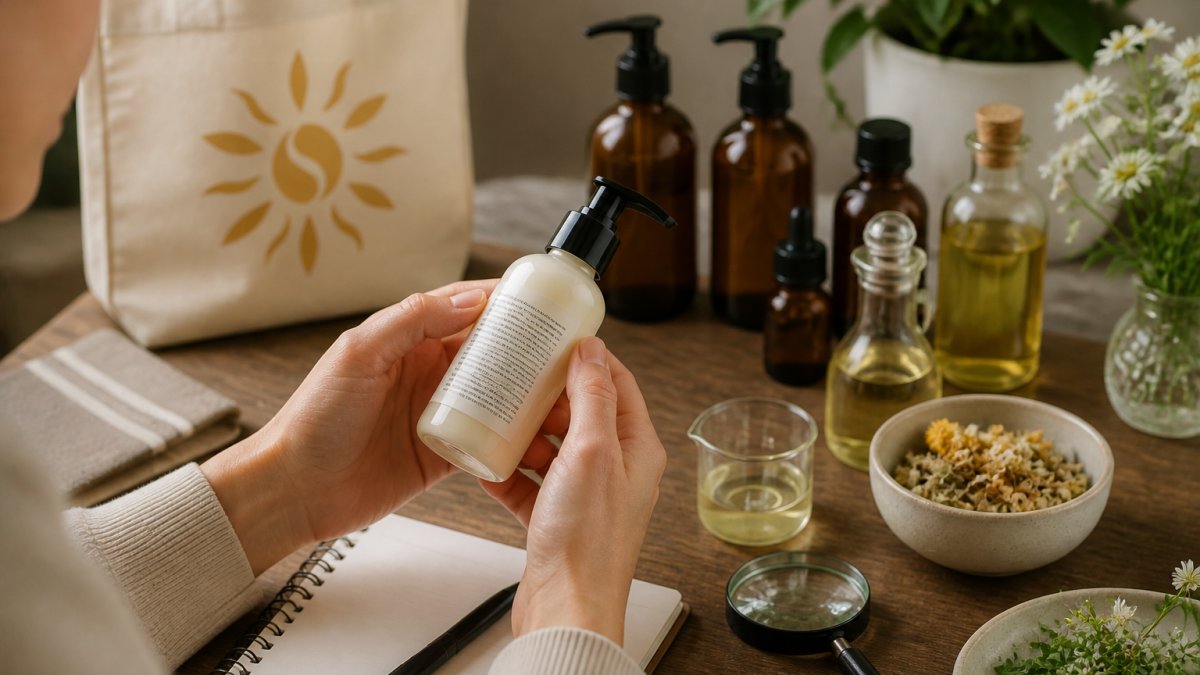
Here's what to look for:
"Parfum" or "Fragrance" is a catch-all term for synthetic fragrance blends. Companies don't have to disclose what's inside, so you can't know what compounds are present. If you want to avoid synthetics, skip the product.
"Essential Oil of [Plant Name]", This is a specific, identifiable ingredient. You know exactly what it is and can research its properties and potential irritants.
"Extract of [Plant Name]", Similar to essential oils, but gentler. This is a botanical extract in a carrier base, not a concentrated essential oil.
"Hydrosol" or "[Plant Name] Water", Rose water, witch hazel water, orange blossom water. These are gentler alternatives that provide subtle fragrance.
"Absolute of [Plant Name]", A concentrated plant essence. Potent, expensive, and usually found in premium formulations.
"Natural Fragrance" is vague, it could mean essential oils, botanical extracts, or a blend. Always check the full ingredient list for what's listed separately.
"Alcohol" or "Alcohol Denat", Often used as a carrier for fragrance compounds. Higher alcohol content can be drying for some skin types.
Ingredients are ordered by concentration (highest to lowest). Fragrance ingredients near the top mean a heavily scented product; near the bottom, fragrance is minimal.
A practical rule: if you can't identify at least 70% of the ingredients, the product likely contains hidden fragrance or synthetic compounds. Soulari Naturals publishes full INCI lists with no hidden formulas, so you can see exactly what's in every product before you buy.
Natural Fragrance Options for Sensitive Skin
If your skin reacts to fragrance easily, you have clear options that don't require sacrificing scent entirely.
Best choice: Hydrosols and scented waters. Rose, chamomile, and witch hazel water provide subtle fragrance with minimal irritation risk, gentle enough for reactive skin, and often deliver soothing or hydrating benefits.
Second choice: Fragrance-free products with unscented carrier oils. Jojoba, argan, coconut, rosehip, shea, cocoa, and mango butter are naturally fragrance-free and deeply nourishing, skincare benefits without fragrance compounds triggering reactions.
Proceed cautiously: Botanical extracts in low concentrations. For plant-derived fragrance, start with products listing botanical extracts near the end of the ingredient list. Chamomile and green tea extracts are generally safer than citrus or warming spices.
Avoid: Essential oils and synthetics. For sensitive skin, these are higher-risk: essential oils are too concentrated, and synthetics are unpredictable, you don't know what's in the "fragrance" blend.
Some people with severe fragrance sensitivity need to stick with fragrance-free products entirely. That isn't a limitation, it's clarity: you know exactly what you're avoiding and why.
Irritation and Allergy Risks: Natural vs. Synthetic Fragrance
The assumption that "natural equals safer" breaks down when you look at actual irritation data.
Natural fragrance compounds can irritate skin. Limonene (citrus oils) causes contact dermatitis in some people, linalool (lavender and floral oils) is a known allergen, and cinnamaldehyde (cinnamon) triggers reactions in sensitive individuals. All plant-derived, all still irritants.
Synthetic fragrances are chemically stable and predictable, which sounds safer, but you don't know what's in the blend. A fragrance labeled simply "fragrance" could contain any combination of 100+ chemicals. That opacity is the real problem.
The risk isn't natural versus synthetic. The risk is known versus unknown.
With identifiable botanical extracts or essential oils, you can research the specific compounds and decide if they suit your skin. With "fragrance," you're gambling.
For sensitive skin, the safest approach is patch testing: apply a small amount to your inner arm and wait 24 hours before using on your face, catching reactions before they affect your entire skin barrier.
If you have a history of fragrance allergies, keep a list of ingredients that have triggered reactions. Over time you'll identify patterns, maybe all citrus oils irritate you, or specifically cinnamon, letting you make informed choices instead of avoiding fragrance entirely.
| Fragrance Type | Irritation Risk | Allergy Risk | Best For | Avoid If |
|---|---|---|---|---|
| Fragrance-free | Minimal | Minimal | Severe sensitivity | You want scent |
| Hydrosols | Low | Low | Sensitive skin | You want strong scent |
| Botanical extracts | Low-moderate | Low-moderate | Most skin types | You have extract allergies |
| Essential oils | Moderate-high | Moderate-high | Normal skin | Sensitive or reactive skin |
| Synthetic fragrance | Moderate | Moderate-high | Cost-conscious | You want transparency |
Choosing the Right Natural Fragrance Alternative for Your Skin
Start by identifying your actual skin need. Are you avoiding fragrance because it irritates you, or because you prefer natural ingredients? The answer changes your strategy.
If fragrance irritates your skin: Choose fragrance-free products or those with hydrosols only. Patch test any new product, even gentle ones, and keep a list of ingredients that have triggered reactions so you can recognize patterns.
If you prefer natural ingredients but don't have sensitivity: Botanical extracts and low-concentration essential oils work well.
If you want both natural fragrance and skin benefits: Choose products with multiple botanical extracts or essential oils selected for specific benefits.
If you're managing sensitive skin or hormonal breakouts: Avoid essential oils entirely. Stick with hydrosols, fragrance-free options, or gentle botanical extracts, your skin barrier is already compromised, and fragrance compounds (natural or synthetic) will slow healing.
The key is matching the fragrance source to your actual skin condition, not marketing claims. A product labeled "natural" isn't automatically better if its specific ingredients trigger your sensitivities.
The skincare industry has conditioned us to accept vague fragrance labels and assume "natural" means safe. Neither is true. Real transparency means knowing exactly what fragrance compounds are in your products and how they affect your specific skin.
At Soulari Naturals, we publish full INCI lists with no hidden formulas. When you're ready to choose skincare that aligns with your actual skin needs and your values, explore our full skincare collection and see how transparency changes everything.
Frequently Asked Questions
What are natural alternatives to synthetic fragrance in skincare?
Natural alternatives include essential oils, botanical extracts, hydrosols (floral waters), CO2 extracts, absolutes, and plant-derived aromatic compounds. These sourced from plants like rose, lavender, chamomile, and citrus offer scent without synthetic chemicals. Each has different concentration levels and skin benefits, making them suitable for various skin types and sensitivities.
Is fragrance-free skincare better for sensitive skin than products with natural fragrance?
Fragrance-free products eliminate irritation risks entirely, making them ideal for highly sensitive or reactive skin. However, some natural fragrance alternatives like diluted hydrosols or gentle botanical extracts can be tolerated by sensitive skin when properly formulated. The key is patch testing and choosing products with transparent ingredient lists that specify the fragrance source.
How do I know if a skincare product contains synthetic fragrance versus natural fragrance?
Check the ingredient label for the term 'parfum' or 'fragrance,' which typically indicates synthetic fragrance. Natural fragrance sources are usually listed by their botanical name, such as 'rosa damascena oil,' 'lavandula angustifolia,' or 'hydrosol.' Full INCI transparency allows you to verify exactly which plant-derived ingredients provide the scent.
Can essential oils in skincare cause irritation or allergic reactions?
Yes, essential oils can irritate sensitive skin, especially at high concentrations. Common irritants include citrus oils, peppermint, and cinnamon. Even natural essential oils contain compounds that trigger reactions in some people. Always patch test new products on a small area first, and choose skincare with carefully diluted essential oils or opt for fragrance-free alternatives if you have reactive skin.