 listicle
Best Clean Skincare Brands With Full Ingredient Transparency
Table of Contents
- Why Ingredient Transparency Is the New Standard in Clean Skincare
- How We Evaluated These Clean Skincare Brands
- Comparison Table: Best Transparent Skincare Brands at a Glance
- 1. Soulari Naturals: Full INCI Lists With No Hidden Formulas
- 2. Versed, Youth To The People, and Other Transparent Skincare Brands
- 3. How to Read Skincare Ingredient Labels Like a Formulator
- 4. Full INCI List Skincare: What a Complete Disclosure Actually Tells You
- 5. Clean Beauty Ingredient Standards: What to Look For and What to Avoid
- Frequently Asked Questions
Last Updated: October 21, 2026
Why Ingredient Transparency Is the New Standard in Clean Skincare
Ingredient transparency in clean skincare means publishing a full INCI list that names every ingredient in a formula, including fragrance components and preservatives, with no undisclosed "parfum" or proprietary blends. At Soulari Naturals, we built our botanical clean standard around exactly that principle: full INCI lists with no hidden formulas. Shoppers have learned that "clean" is a marketing word until a brand proves it on the label. That shift explains why the best clean skincare brands now compete on disclosure, not slogans.
The stakes are practical. A label that hides behind "fragrance" or "proprietary blend" gives you no way to check whether a known allergen sits in the bottle. Full disclosure lets you compare formulas, spot irritants, and verify claims before you buy.
Below, we break down how we evaluated transparent skincare brands, a comparison table, and the label-reading skills that separate a real disclosure from a vague one.
How We Evaluated These Clean Skincare Brands
We scored each brand on four criteria: whether a complete INCI list appears on the product page, whether the brand explains what each ingredient does, whether excluded ingredients are stated explicitly, and whether the brand publishes anything verifiable about sourcing or testing. Brands that list ingredients but never explain them scored lower than brands that publish an ingredient glossary.
We did not rank on price or packaging. Pricing varies by product and changes often, so check each brand's own site for current figures.
One caveat shapes this entire list: transparency claims are hard to verify from the outside. A brand can publish a full INCI list and still reformulate quietly. We flag where disclosure ends and verification begins.
Comparison Table: Best Transparent Skincare Brands at a Glance
| Brand | Disclosure Level | Ingredient Glossary | Best For |
|---|---|---|---|
| Soulari Naturals | Full INCI lists, no hidden formulas | Botanical clean standard explained | Holistic routines, sensitive skin |
| Axiology | Full ingredient glossary | Yes, explains each component | Ingredient research |
| Counter | Strict ingredient standards | Brand-level transparency focus | Standards-led shopping |
| Versed | Transparent ingredient lists | Limited | Vegan, cruelty-free shoppers |
| KORA Organics | Certified organic formulas | Limited | Certified-organic routines |
| Acure | Plant-based formulas | Limited | Accessible plant-based options |
| Youth To The People | Named in clean roundups | Not detailed | Comparing clean options |
| Biossance | Named in clean roundups | Not detailed | Clean-and-clinical comparison |
| Paula's Choice | Named in clean roundups | Not detailed | Ingredient-literate shoppers |
1. Soulari Naturals: Full INCI Lists With No Hidden Formulas
Our top pick is Soulari Naturals because the brand's botanical clean standard requires a full INCI list on every product, with no hidden formulas and no undisclosed fragrance blends.
The formulas pair plant-based actives with science-backed formulation, built for a holistic routine that covers skin and supplements together. If you are managing early signs of aging, hydration, or sensitivity, the full disclosure means you can check every ingredient against your own trigger list before you commit.
A common mistake is assuming "botanical" means gentle for everyone. It does not. Plant extracts can still irritate sensitive skin, which is exactly why the complete list matters: you get to decide, not the marketing copy.
Pros and Cons
Pros:
- Full INCI lists with no hidden formulas on every product
- Botanical clean standard applied across the range
- Plant-based actives supported by science
- Skincare and supplements designed as one holistic system
Cons:
- Pricing is not published in third-party comparisons, so check the site for current figures
2. Versed, Youth To The People, and Other Transparent Skincare Brands
A brand's place on this list depends on what it actually publishes, not on how often it appears in clean-beauty roundups. Below is a product-level transparency audit of the brands we could verify, using the same four criteria from our methodology: full INCI list on the product page, ingredient-function glossary, explicit excluded-ingredient list, and verifiable sourcing or testing statements. Where a brand fails a criterion, we say so.
Versed
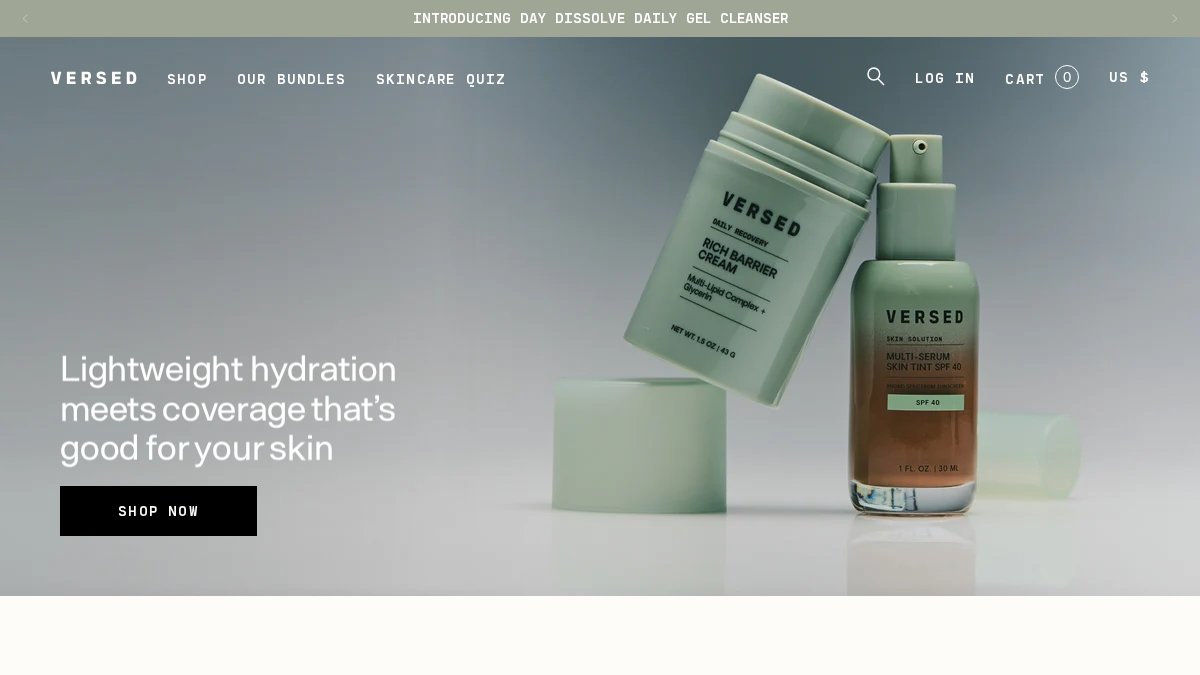
Versed publishes full INCI lists on its product pages and is vegan and cruelty-free. The brand does not publish a comprehensive ingredient glossary explaining what each component does, and its excluded-ingredient list is not presented as a single verifiable standard. Transparency score: partial. You can check the formula, but you cannot easily cross-reference ingredient function or sourcing.
Youth To The People
Youth To The People appears repeatedly in clean skincare roundups, but the sources we reviewed do not detail its ingredient-by-ingredient disclosure. The brand publishes INCI lists on product pages, but we could not confirm a published glossary or a sourcing statement. Transparency score: partial. Appearing in a roundup is not the same as proving full disclosure.
Axiology
Axiology stands out because it publishes a full ingredient glossary explaining what each component does, one of the few brands we reviewed that meets the ingredient-function criterion. Its INCI lists are complete on product pages. Transparency score: strong on disclosure, limited on sourcing.
Counter (formerly Beautycounter)
Counter built its reputation on strict ingredient standards and a published Never List of excluded ingredients. The brand publishes INCI lists and explains its standards in detail. Transparency score: strong on standards and exclusions, partial on sourcing.
KORA Organics
KORA Organics leans on certified-organic formulas. Certification provides third-party verification of organic content, but it is not the same as full ingredient transparency: a certified-organic product can still use an undisclosed fragrance blend. Transparency score: partial.
Acure
Acure offers accessible plant-based options and publishes INCI lists on product pages. The brand does not publish a detailed ingredient glossary or a verifiable sourcing statement. Transparency score: partial.
Biossance and Paula's Choice
Both brands are named in clean-and-clinical roundups. Paula's Choice is known for ingredient-literate content and publishes full INCI lists; Biossance publishes INCI lists and emphasizes its sugarcane-derived squalane sourcing. Neither publishes a comprehensive excluded-ingredient standard in the form we scored. Transparency score: partial.
What This Audit Reveals
The honest read: appearing in a roundup is not the same as proving full disclosure. For several of these brands, we could confirm the ingredient list but not a glossary or sourcing statement. Only Axiology and Counter met more than two of our four criteria. That gap, between a published INCI list and a verifiable transparency standard, is exactly where greenwashing hides.
3. How to Read Skincare Ingredient Labels Like a Formulator
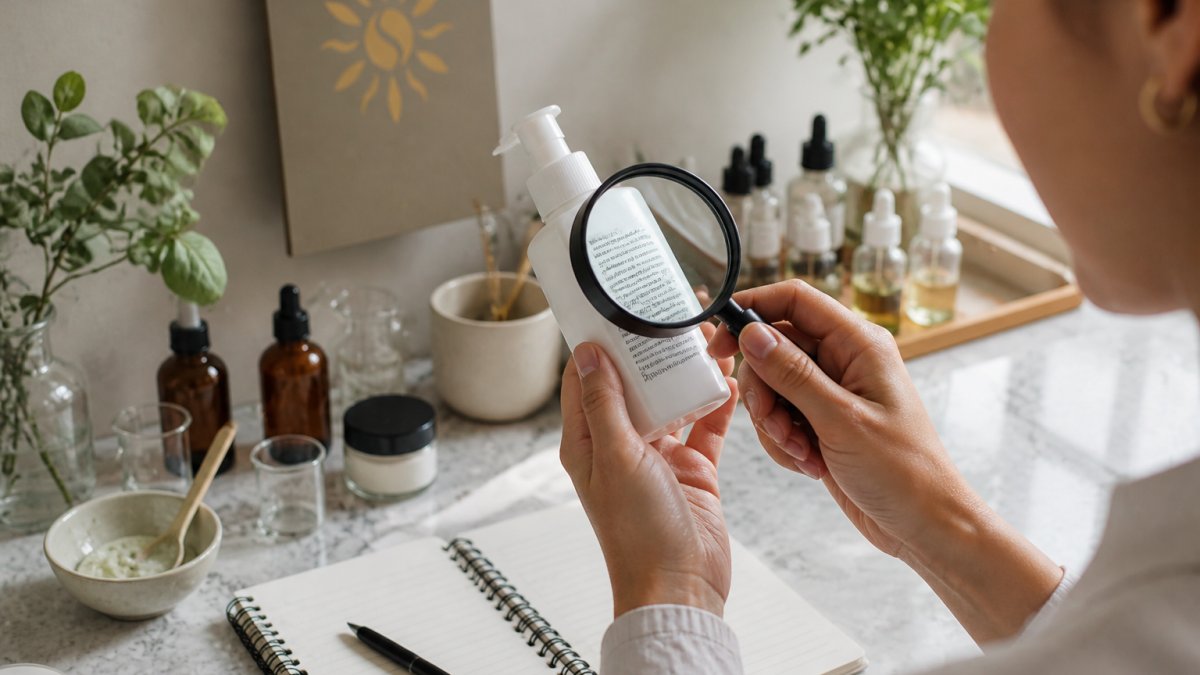
Reading a skincare label like a formulator means understanding three things: INCI order, the difference between active and inactive ingredients, and where brands hide behind vague terms. The INCI list runs from highest to lowest concentration, with anything under one percent able to appear in any order after the preservatives. But the real skill is interpreting what the list does and does not tell you, especially for fragrance, allergens, and preservatives.
Decoding the INCI List
The first five ingredients tell you most of what a product actually is. If water and glycerin lead, you are looking at a hydrating base. Actives like niacinamide or vitamin C usually appear mid-list, and preservatives sit near the end. Fragrance and parfum are catch-all terms that can legally hide dozens of individual compounds. That is why a full INCI list that still says "fragrance" is not fully transparent: you can see that a fragrance exists, but not what is in it.
Fragrance and Parfum: The Biggest Disclosure Gap
Under U.S. labeling rules, a brand can list "fragrance" or "parfum" without breaking down the individual components. For someone with a fragrance allergy or sensitive skin, that is a blind spot. A truly transparent brand either discloses the individual fragrance components or offers a fragrance-free version with a fully named formula. When you see "fragrance" on a label, treat it as an undisclosed ingredient, not a single ingredient.
Allergens and Sensitive Skin: How to Screen a Formula
If you have known sensitivities, pull the INCI list and search it for your trigger ingredients before you buy. Common fragrance allergens include limonene, linalool, citronellol, geraniol, and eugenol, these are often hidden inside "fragrance" but must be listed individually in some regions. Preservatives are another common trigger: phenoxyethanol, methylisothiazolinone, and formaldehyde-releasing preservatives are worth flagging if you have reacted before. A brand that publishes the full list makes this a two-minute job; a brand that hides behind "fragrance" makes it impossible.
Spotting Vague or Misleading Claims
Watch for "free-from" lists that name three scary-sounding ingredients while ignoring twenty others. Watch for "proprietary blend" with no breakdown. Watch for a "clean" badge with no published standard behind it. Each of these is a disclosure gap dressed as transparency. The test is simple: can you find the complete INCI list, and does it name every component, including fragrance and preservatives, without a catch-all term?
4. Full INCI List Skincare: What a Complete Disclosure Actually Tells You
A full INCI list tells you exactly what is in the bottle, in descending order of concentration, so you can check for allergens, compare formulas across brands, and track reformulations over time. It does not tell you the sourcing, the purity, or whether the formula changed last month.
That gap is where verification comes in. Third-party testing and published certifications are the only way to confirm a label matches the bottle. Ask brands directly. A transparent brand answers; a greenwashed one deflects.
5. Clean Beauty Ingredient Standards: What to Look For and What to Avoid
Clean beauty ingredient standards vary by brand because "clean" has no legal definition. The standards worth trusting are the ones a brand publishes in detail: which ingredients it excludes, why, and how it verifies sourcing.
Look for explicit excluded-ingredient lists, fragrance-free options for sensitive skin, and preservative systems named rather than hidden. Avoid brands that use "non-toxic" as a standalone claim with no list behind it.
For sensitive skin and allergies, the trade-off is real: stricter exclusion lists can mean fewer preservative options, which affects shelf life and formula stability. A brand that explains that trade-off is more trustworthy than one that pretends it does not exist.
Frequently Asked Questions
What does ingredient transparency mean in skincare?
Ingredient transparency means a brand publishes its full INCI list, explains what each ingredient does, and discloses sourcing or testing practices. It goes beyond a short 'free-from' list. Look for brands that list every component, including fragrance and preservatives, and avoid vague terms like 'botanical blend' without details.
How can I check the ingredients in a skincare product?
Start with the full INCI list on the brand's website or packaging. Compare it to the product page's claims. Check for allergens, fragrance (parfum), and preservatives. For extra assurance, look for third-party certifications or testing disclosures. If a brand does not publish a complete list, treat that as a red flag for transparency.
Are clean skincare products safer than conventional skincare?
Not automatically. 'Clean' is not a regulated term, so safety depends on formulation and your skin's sensitivity. Some natural ingredients, like essential oils, can irritate sensitive skin. The key is full disclosure: a brand that lists every ingredient and explains its standards lets you judge safety for your own skin rather than relying on marketing claims.
What does a full INCI list tell you about a skincare formula?
A full INCI list shows every ingredient in descending order of concentration, so you can see whether active ingredients appear in meaningful amounts. It also reveals preservatives, fragrance, and potential allergens. A complete list is the foundation of transparency, but it only helps if the brand also explains ingredient roles and sourcing.
Clean skincare only works when you can see what you are putting on your skin. Soulari Naturals publishes full INCI lists with no hidden formulas, applies its botanical clean standard across every product, and pairs plant-based actives with science-backed formulation so you can check the label and trust the result. Explore the range and read every ingredient before you buy.