 how-to
Signs of Greenwashing in Skincare Labels
Table of Contents
- What Greenwashing Means in Skincare and Beauty
- How to Read Skincare Ingredient Labels and Spot Red Flags
- Recognizing Misleading Skincare Claims
- Eco-Friendly Skincare Certifications: What They Actually Verify
- Evaluating Sustainable Skincare Packaging and Waste Claims
- Your Label-by-Label Verification Checklist
- Frequently Asked Questions
Last Updated: October 16, 2026
What Greenwashing Means in Skincare and Beauty
Greenwashing is when a skincare or beauty brand makes environmental or sustainability claims that sound impressive but lack real evidence or action behind them.
Real sustainability requires specific evidence: third-party certifications, measurable environmental data, clear sourcing practices, and honest ingredient disclosure. Without these, you're buying marketing, not ethics.
This guide covers the most common signs of greenwashing in skincare labels, so you can read ingredient labels, spot vague claims, verify certifications, and evaluate packaging.
How to Read Skincare Ingredient Labels and Spot Red Flags
Learning to read skincare ingredient labels is your first defense against greenwashing. Every product sold in regulated markets must list ingredients in descending order by weight, the INCI (International Nomenclature of Cosmetic Ingredients) list. It's the only part of the label you can fully trust, since it's legally mandated and standardized globally.
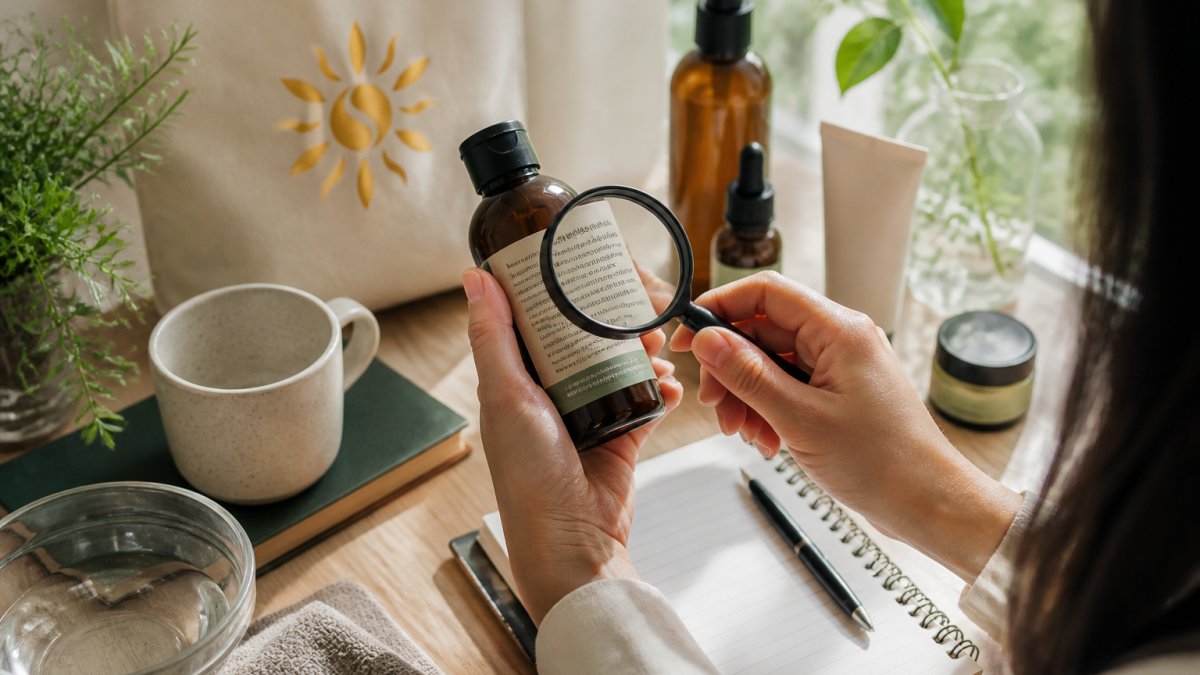
Decoding the INCI List
The INCI list reads like a chemistry textbook, but you don't need to memorize it. Focus on the first five ingredients, they make up roughly 80% of the formula. If the first ingredient is water (aqua), the product is mostly water-based; if it's an oil, it's oil-based.
Ingredients listed later appear in tiny amounts, and brands exploit this. They'll add a pinch of a trendy botanical extract near the end of the list, then market the product around it. "Infused with rose hip oil" sounds luxurious, but if rose hip is the 23rd ingredient out of 30, it's barely present.
Look for these red flags in the INCI list:
- Fragrance or parfum listed in the top five (indicates high fragrance content, which can irritate sensitive skin)
- "Fragrance" or "fragrance complex" instead of specific ingredients (brands hide fragrance formulas as trade secrets, so you can't verify what's actually in it)
- Silicones (dimethicone, cyclomethicone) high in the list if the brand claims to be "natural" or "clean"
- Synthetic preservatives if the brand claims to be "preservative-free" (all products need preservatives; if they claim otherwise, they're misleading you)
Identifying Selective Disclosure
Selective disclosure is when a brand highlights one good ingredient while burying problematic ones. It's greenwashing disguised as transparency.
Example: A brand markets a moisturizer as "enriched with hyaluronic acid and vitamin C." Both are legitimate actives, but the INCI list shows synthetic fragrance second and petroleum-derived mineral oil third. The brand emphasized the science-backed actives and skipped the less trendy ingredients.
This isn't necessarily a bad product. But it's not honest marketing. Selective disclosure lets brands claim whatever angle sells best while hiding the full picture.
Watch for these patterns:
- Marketing emphasizes one or two ingredients that appear late in the INCI list
- The brand uses scientific-sounding language for those ingredients (hyaluronic acid, peptides, retinol) but stays vague about everything else
- Sustainability claims focus on one sourced ingredient while ignoring the rest of the formula
- Before-and-after photos highlight results from one active while the formula contains multiple actives
Recognizing Misleading Skincare Claims
Misleading skincare claims are the most common signs of greenwashing in skincare labels. Brands use unregulated buzzwords and unsupported statements to create an impression of safety, naturalness, or sustainability the product may not deliver.
Vague or Unregulated Terms
These words appear on skincare labels constantly. They sound meaningful but have no legal definition or standardized meaning in most markets.
"Natural", The biggest offender.
"Clean beauty", Another undefined term. One brand's clean list might exclude silicones; another's might exclude preservatives.
"Eco-friendly," "green," "sustainable", These sound specific but aren't.
"Non-toxic", Misleading, because all products contain chemicals and toxicity depends on dose and exposure.
"Dermatologist-tested" or "hypoallergenic", These sound official but mean little. "Dermatologist-tested" often means one dermatologist looked at it once.
The pattern is consistent: vague terms let brands claim virtue without proving it.
Unsupported Environmental or Sustainability Claims
Environmental claims are where greenwashing becomes most deceptive, sweeping sustainability statements with no measurable evidence.
Common unsupported claims:
-
"Carbon-neutral", Without a third-party carbon audit, this is unverified. The brand might have offset some emissions without disclosing the methodology, so you can't confirm the offset happened or the calculation was accurate.
-
"Responsibly sourced", Vague. Responsible by whose standards, fair wages, environmental protection, both? Without certification, you don't know.
-
"Supports local communities", How much revenue actually reaches communities, 1% or 50%? Are workers fairly compensated? The claim gives no specifics.
-
"Cruelty-free", Not standardized. Does it mean no animal testing, no animal ingredients, or no testing by parent companies? The definition varies by brand.
-
"Biodegradable", Incomplete information. Most skincare ingredients biodegrade under certain conditions (time, temperature, pH), but the claim doesn't say how long it takes or what conditions are needed.
-
"Vegan", Legitimate if verified (no animal-derived ingredients), but vegan doesn't automatically mean sustainable or ethical. A vegan formula can still use unsustainably sourced palm oil or exploit workers.
Real sustainability claims are specific and verifiable, with numbers, timelines, and third-party verification. "We reduced packaging waste by 40% in 2025 by switching to aluminum instead of plastic" is a real claim. "We're committed to sustainability" is greenwashing.
Eco-Friendly Skincare Certifications: What They Actually Verify
Certifications are your most reliable tool for cutting through greenwashing, but not all are equal. Some are rigorous and independently verified; others are created by brands themselves or have minimal standards.
Third-Party Certification Standards
Real certifications come from independent organizations that audit brands and verify claims. Here's what matters:
USDA Organic, One of the strictest certifications. It verifies that at least 95% of ingredients are organic and meet federal standards for organic production, with USDA audits of farms and manufacturers.
ECOCERT, This European certification verifies organic and natural ingredients, sustainable sourcing, and environmentally responsible manufacturing, auditing production facilities and ingredient suppliers.
Leaping Bunny, Certifies cruelty-free status, verifying that a brand and its suppliers don't test on animals through unannounced audits.
B Corp Certification, Verifies that a company meets high standards for social and environmental performance, accountability, and transparency.
Each certification covers a different aspect: USDA Organic verifies ingredient sourcing, Leaping Bunny animal welfare, Fair Trade labor practices.
How to Verify Certification Legitimacy
Greenwashing extends to fake certifications. Some brands create official-sounding seals that don't exist. Others cite certifications they don't actually hold.
To verify a certification:
- Visit the certifying organization's website directly. Search their certified brand list. If the brand isn't listed, the certification is fake.
- Check the certification number or ID on the product and cross-reference it on the certifier's website.
- Look for the certifier's contact information on the label. Legitimate certifiers want to be contacted for verification; if there's no way to verify, it's likely false.
- Be skeptical of vague certifications with no clear issuing body. "Certified natural" without naming the certifier is a red flag.
At Soulari Naturals, we believe transparency extends to verification. Our botanical clean standard means we disclose our full INCI lists, no hidden formulas.
Evaluating Sustainable Skincare Packaging and Waste Claims
Packaging is where greenwashing runs rampant. Brands use visual tricks to suggest environmental responsibility without meaningful changes to how products are packaged or disposed of.
Green-Colored Packaging and Nature Imagery
The first greenwashing tactic is visual: green bottles, leaf logos, nature photography, earthy colors. These design choices create an emotional association with nature and sustainability, costing the brand nothing while influencing your perception significantly.
A green bottle doesn't mean the product is sustainable, the color is just marketing. What matters is the material itself: plastic, glass, or aluminum? Can it be recycled? How much packaging waste does it generate?
Nature imagery works the same way. A photo of a pristine forest or wildflowers suggests the brand cares about the environment, but the image has nothing to do with the product's actual impact.
Real sustainable packaging focuses on substance, not aesthetics:
- Minimal packaging (less material overall)
- Recyclable or compostable materials clearly labeled
- Refillable containers that reduce repeat packaging waste
- Lightweight materials that reduce transportation emissions
- Information about how to recycle or dispose of the packaging responsibly
Recyclability, Biodegradability, and Material Sourcing
Claims about recyclability are often misleading because they ignore the reality of waste systems.
"Recyclable" doesn't mean recycled. A package can be technically recyclable but end up in a landfill because local programs don't accept it.
"Biodegradable" is incomplete information. Most skincare ingredients break down eventually, but "eventually" might mean 50 years in a landfill or 5 years in industrial composting.
Material sourcing matters more than the final claim. A plastic bottle made from recycled ocean plastic sounds impressive, but if it's still single-use, you're just moving the waste problem.
Real sustainable packaging includes:
- Specific material information (aluminum, glass, post-consumer recycled plastic percentage)
- Clear recycling or disposal instructions
- Information about how the packaging reduces overall waste
- Commitment to reducing packaging over time, not just switching materials
Your Label-by-Label Verification Checklist
Use this checklist when evaluating any skincare product for greenwashing. Go through each step before buying.
| Check | What to Look For | Red Flag | Green Flag |
|---|---|---|---|
| INCI List | First five ingredients | Fragrance, silicones, or mineral oil in top three if brand claims "natural" | Plant-based actives, water, or oils as primary ingredients |
| Ingredient Claims | Do marketing claims match the INCI list? | Highlighted ingredient appears past #10 on the list | Highlighted ingredient appears in top five |
| Environmental Claims | Is the claim specific and verifiable? | "Sustainable," "eco-friendly," or "natural" with no details | Specific claim with numbers, timeline, or third-party verification |
| Certifications | Is the certification real and relevant? | Vague seal with no issuing organization or unverifiable code | USDA Organic, ECOCERT, Leaping Bunny, Fair Trade, or B Corp listed with verification code |
| Packaging | What's the material and end-of-life story? | "Recyclable" or "biodegradable" with no specifics or material information | Specific material (aluminum, glass), percentage recycled content, or refillable design |
| Sourcing | Can you trace ingredient origins? | "Responsibly sourced" or "ethically produced" with no details | Specific origin information, Fair Trade certification, or direct supply chain transparency |
| Full Disclosure | Does the brand hide anything? | Proprietary blend, fragrance complex, or "natural fragrance" instead of specific ingredients | Complete INCI list, all ingredients listed by name, no hidden formulas |
Start with the INCI list. Everything else flows from what's actually in the product. If the ingredients don't match the marketing claims, greenwashing is happening.
Next, verify certification claims by visiting the certifier's website.
Then, evaluate environmental claims. If the brand can't point to specific actions, measurable results, or third-party verification, the claim is marketing, not evidence.
Finally, check for hidden ingredients.
Greenwashing thrives on vagueness. Just the information you need to make a choice that actually aligns with your values. Shop Skincare
Frequently Asked Questions
What are the most common signs of greenwashing in skincare labels?
The most common signs include vague terms like 'natural' or 'eco-friendly' without certification, green-colored packaging designed to suggest sustainability, selective ingredient disclosure that highlights one plant extract while omitting harmful additives, and unsubstantiated environmental claims. Look for brands that claim sustainability without third-party verification, use nature imagery without evidence, or list only a few ingredients while hiding the full INCI list. Transparency in the full ingredient list and verifiable certifications are key indicators of authenticity.
How do I verify that eco-friendly skincare certifications are legitimate?
Check whether the certification comes from a recognized third-party organization with published standards, not from the brand itself. Legitimate certifications are issued by independent bodies and can be verified on their official websites. Look for certifications that specify what they cover, whether it's ingredient sourcing, manufacturing practices, or packaging materials. Be skeptical of vague certifications or logos that lack a verifiable issuer. Soulari Naturals provides full INCI lists and transparency.
What's the difference between 'natural,' 'clean,' and 'eco-friendly' skincare claims?
'Natural' typically refers to plant-derived ingredients but is largely unregulated and doesn't guarantee safety or sustainability. 'Clean beauty' is a marketing term without legal definition and can include synthetic ingredients. 'Eco-friendly' should mean the product or packaging has minimal environmental impact, but this claim often lacks evidence. None of these terms are legally defined, making them vulnerable to greenwashing. Seek brands that explain their specific sourcing practices, ingredient sourcing, and environmental impact rather than relying on these buzzwords alone.
How do I know if a skincare product's sustainability claims are legitimate versus greenwashing?
Legitimate sustainability claims include specific, measurable details: the exact source of ingredients, recyclable or compostable packaging materials with third-party verification, carbon footprint data, and transparent supply chain information. Greenwashing uses vague language like 'eco-conscious' or 'sustainable sourcing' without evidence. Compare the full ingredient list against the brand's claims, check for third-party certifications, and verify packaging material claims on the manufacturer's website. Brands with nothing to hide provide complete INCI lists.