 how-to
Botanical Skincare for Hormonal Breakouts: A Natural Routine
Table of Contents
- Understanding Hormonal Acne and Why Botanical Skincare Matters
- Key Botanical Ingredients for Acne-Prone Skin
- Building a Natural Skincare Routine for Hormonal Acne
- How to Treat Hormonal Acne Naturally Without Harsh Chemicals
- Gentle Skincare for Sensitive, Acne-Prone Skin
- Realistic Progress and When to Seek Professional Help
- Frequently Asked Questions
Last Updated: October 11, 2026
Understanding Hormonal Acne and Why Botanical Skincare Matters
Hormonal acne is a specific type of breakout triggered by fluctuations in hormones rather than bacteria or external dirt alone, making botanical skincare hormonal breakouts a growing focus in natural skincare solutions.
The reason hormonal breakouts feel so stubborn is simple: standard acne treatments often miss the root cause. Most over-the-counter products strip your skin with harsh chemicals designed to kill bacteria.
This is where botanical skincare for hormonal skin breakouts changes the equation. Plant-based actives work differently than synthetic treatments. They calm inflammation without stripping. They support your skin barrier instead of damaging it.
At Soulari Naturals, we focus on botanical clean skincare. When your skin is already reactive and inflamed, you need ingredients that soothe while they work.
Key Botanical Ingredients for Acne-Prone Skin
The most effective botanical skincare for hormonal skin breakouts relies on specific plant compounds that address inflammation, balance oil production, and support skin healing. Not all botanical ingredients work equally. Some are marketing. Others deliver measurable results.
Anti-inflammatory plant oils and extracts
The best plant oils for hormonal acne serve a dual purpose: they reduce inflammation AND support your skin barrier. Many people assume oil makes acne worse.
Jojoba oil closely mimics your skin's natural sebum. It signals to your skin that it's properly hydrated, which actually reduces excess oil production. It penetrates without clogging pores.
Rosehip oil contains vitamin A compounds that accelerate cell turnover and reduce acne scarring. It's particularly useful for the discoloration and texture issues hormonal acne leaves behind.
Grapefruit oil has natural antimicrobial properties without the harshness of synthetic actives. It supports gentle cleansing without stripping.
Tea tree oil requires caution. It's powerful but can irritate sensitive skin when used undiluted. In properly formulated products, it helps manage active blemishes without triggering inflammation.
Plant extracts like witch hazel act as gentle astringents. They reduce excess oil and tighten pores without the alcohol-based formulations that damage your skin barrier. Look for alcohol-free versions.
Antioxidants and calming botanicals
Hormonal acne creates inflammation at a cellular level. Antioxidants interrupt that process before breakouts fully form.
Green tea extract is one of the most studied botanical actives for acne-prone skin. It reduces sebum production, fights bacteria, and provides antioxidant protection. It's gentle enough for daily use even on reactive skin.
Aloe vera soothes irritated skin and supports healing without leaving residue. It's particularly useful after targeted treatments when your skin needs calming.
Passionflower reduces redness and irritation. It's less well-known than aloe, but research shows it effectively calms inflamed, acne-prone skin.
Honey (particularly raw and botanical varieties) has natural humectant properties that draw moisture to your skin while supporting gentle healing. It's not just a mask ingredient, properly formulated honey provides ongoing skin support.
Sage extract helps balance sebum and has antimicrobial properties without irritation. It's traditionally used in skincare for oily, breakout-prone skin.
| Ingredient | Primary Benefit | Best For | Caution |
|---|---|---|---|
| Jojoba oil | Balances sebum, supports barrier | All skin types | None for most |
| Tea tree oil | Antimicrobial | Active breakouts | Can irritate if undiluted |
| Green tea | Antioxidant, reduces sebum | Daily use | Minimal, very gentle |
| Aloe vera | Soothes inflammation | Reactive skin | Ensure alcohol-free |
| Witch hazel | Gentle astringent | Oily, breakout-prone | Avoid alcohol-based |
| Rosehip oil | Reduces scarring, vitamin A | Post-breakout healing | None significant |
Building a Natural Skincare Routine for Hormonal Acne
A routine for botanical skincare hormonal breakouts must follow a specific order. Timing and layering matter. The right sequence amplifies the benefits of botanical skincare for hormonal skin breakouts while protecting your skin barrier.
Step 1: Gentle cleansing without stripping
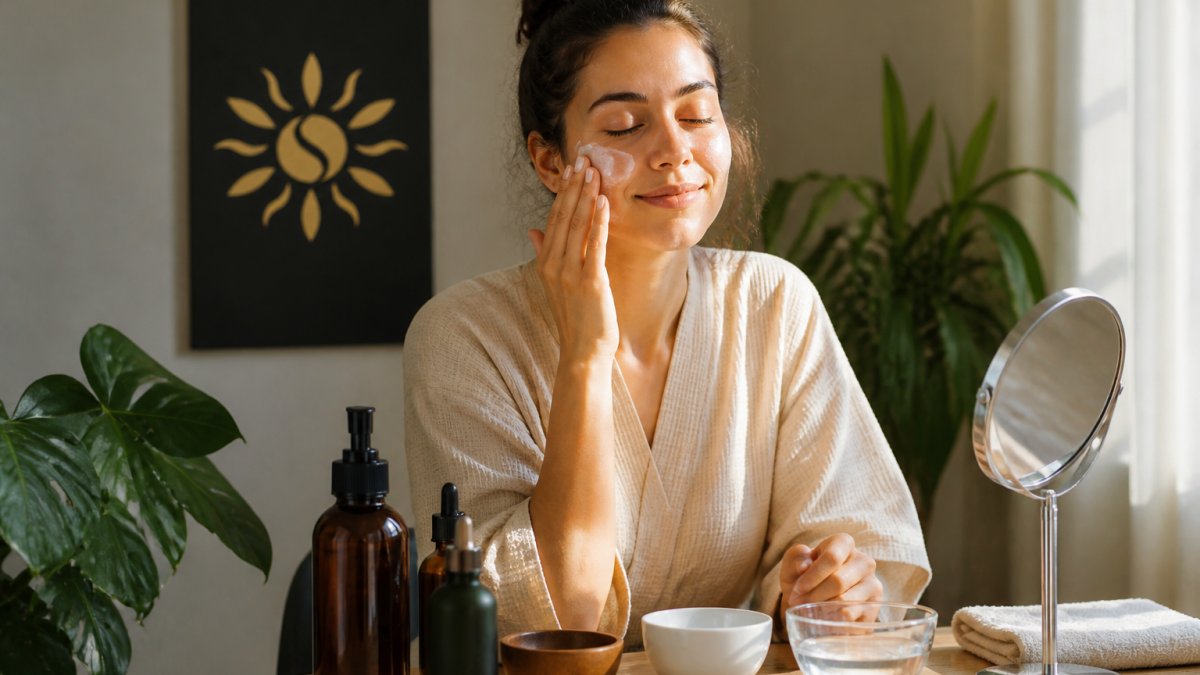
Start with a non-stripping cleanser. Most people use cleansers that are too harsh. They strip your skin's natural oils. Your skin responds by producing even more oil to compensate. More oil means more clogged pores and more breakouts.
A gentle botanical cleanser should remove makeup and daily buildup without creating tightness or dryness. Look for formulas that include:
- Mild plant-based surfactants instead of sulfates
- Soothing botanicals like chamomile or aloe
- No sulfates, parabens, or synthetic fragrances
Cleanse twice daily: morning and evening. Use lukewarm water, not hot. Hot water increases inflammation and disrupts your skin barrier.
Step 2: Targeted treatment with botanical actives
After cleansing, apply your active botanical treatment while skin is still slightly damp. This allows better absorption and reduces irritation.
For hormonal acne, a targeted serum or treatment with green tea, witch hazel, or tea tree oil addresses active breakouts and prevents new ones. Apply to affected areas, typically the jawline, chin, and lower cheeks where hormonal breakouts cluster.
Wait 1-2 minutes before moving to hydration. This gives the active ingredients time to penetrate without being diluted immediately.
Use this step once daily at first. If your skin tolerates it well after two weeks, you can increase to twice daily. Slow introduction prevents irritation and allows your skin to build tolerance.
Step 3: Hydration and skin barrier support
This is the step most people skip or rush. It's actually the most important for hormonal acne-prone skin.
After your active treatment, apply a hydrating botanical serum or lightweight moisturizer. This locks in the actives and supports your skin barrier. A compromised barrier means more inflammation, more sensitivity, and more breakouts.
Look for formulas with:
- Hyaluronic acid or plant-based humectants
- Botanical oils like jojoba or rosehip
- Calming extracts like aloe or passionflower
- No heavy occlusives that clog pores
Apply to damp skin. The moisture helps your skin absorb hydration more effectively.
At night, you can add a slightly richer botanical oil or balm to support overnight healing. During the day, keep it lightweight so it doesn't interfere with makeup or feel greasy.
How to Treat Hormonal Acne Naturally Without Harsh Chemicals
Harsh chemicals create a cycle: they strip your skin, trigger inflammation, worsen breakouts, and force you to use more products to manage the damage. Natural botanical skincare breaks that cycle.
The key is consistency over intensity. A gentle routine used daily outperforms an aggressive routine used sporadically. Your skin barrier needs time to heal and strengthen.
Start with one botanical active (typically green tea or a gentle witch hazel formula). Use it for two weeks. Observe how your skin responds.
Never introduce multiple new products simultaneously. You won't know which ingredient caused a reaction. You also won't know which one is actually working.
Most people see initial improvement in redness and sensitivity within two weeks. Active breakouts take longer, typically three to four weeks for existing blemishes to resolve and six to eight weeks to see a clear reduction in new breakouts.
Gentle Skincare for Sensitive, Acne-Prone Skin
Hormonal acne often comes with heightened skin sensitivity. Your skin is reactive, inflamed, and easily triggered. This requires a different approach than treating acne on resilient skin.
Patch testing and compatibility
Before applying any new botanical ingredient to your full face, test it on a small area first. Apply to your inner arm or behind your ear. Wait 24 hours. If there's no redness, itching, or irritation, it's likely safe for your face.
For facial patch testing, apply a small amount to a discrete area like your jawline or temple. Use it for 3-5 days before expanding to larger areas. This catches delayed reactions before they affect your entire face.
Certain combinations of botanicals can increase irritation. Tea tree oil and witch hazel together can be too intense for sensitive skin. Green tea and aloe work well together. Rosehip oil and jojoba oil layer smoothly. Learn which botanicals complement each other and which ones compete.
Avoiding common irritants
Even natural ingredients can irritate sensitive, acne-prone skin if they're the wrong type or concentration.
Skip essential oils applied directly to skin. They're concentrated and often too strong. Use products where essential oils are properly diluted in carrier oils or formulated into serums.
Avoid high-alcohol products. Even "natural" alcohol-based toners and extracts strip your skin barrier and trigger more breakouts.
Citrus oils like lemon or grapefruit can increase photosensitivity. If you use them, always apply SPF during the day. Better yet, save citrus-based products for evening use only.
Don't use multiple exfoliating ingredients simultaneously. Combining a chemical exfoliant with a physical scrub or enzyme treatment overwhelms sensitive skin. Choose one exfoliation method and use it no more than twice weekly.
Fragrance, even natural fragrance from essential oils, can irritate acne-prone skin. Look for fragrance-free or minimally scented formulas.
Realistic Progress and When to Seek Professional Help
Botanical skincare for hormonal skin breakouts works, but it works on a timeline. Understanding realistic expectations prevents frustration and keeps you consistent.
Most people see the first signs of improvement within two to three weeks: reduced redness, less sensitivity, smaller breakouts. Significant clearing typically takes six to eight weeks.
This timeline is normal. Your skin cells turn over roughly every 28 days. Meaningful change requires multiple cycles of renewal.
Track your progress with photos. Take a baseline photo under consistent lighting. Photograph your skin weekly. Visual comparison over time shows progress that daily observation might miss.
Some hormonal acne requires professional intervention. If you're experiencing:
- Severe, cystic breakouts that don't respond to topical treatment after eight weeks
- Breakouts that coincide exactly with your menstrual cycle and are severely affecting quality of life
- Acne accompanied by other hormonal symptoms (irregular periods, excess hair growth, significant mood changes)
- Breakouts that leave deep scarring or persistent discoloration
...consult a dermatologist. Options like hormonal birth control, spironolactone, or prescription retinoids address hormonal acne at its source.
A dermatologist can also rule out other conditions mimicking acne (rosacea, folliculitis, or fungal infections) that require different treatment approaches.
Hormonal acne is frustrating because it feels out of your control. Your hormones shift. Your skin reacts.
Botanical skincare for hormonal skin breakouts addresses the actual problem: inflammation, a compromised skin barrier, and reactive sensitivity. At Soulari Naturals, we've built our skincare around botanical clean standards, full INCI lists with no hidden formulas, plant-based actives supported by science, and formulations designed specifically for sensitive, acne-prone skin.
Shop our skincare collection and discover how botanical actives can transform your routine.
Frequently Asked Questions
How long does it take for botanical skincare to improve hormonal breakouts?
Most people see initial improvements in redness and irritation within 2-3 weeks of consistent use, though visible reduction in active breakouts typically takes 4-8 weeks. Hormonal acne follows your body's cycle, so tracking changes across at least two full menstrual cycles gives a clearer picture of whether your routine is working. Patience with botanical ingredients is important, they work gently and cumulatively rather than aggressively.
Which botanical ingredients are most effective for acne-prone skin?
Green tea, aloe vera, tea tree oil, witch hazel, and jojoba oil are among the most researched plant actives for acne-prone skin. Green tea provides antioxidants and helps balance sebum; aloe vera soothes inflammation and supports the skin barrier; tea tree oil has antimicrobial properties; witch hazel acts as a gentle astringent; and jojoba oil mimics skin's natural oils without clogging pores. Combining these in a layered routine targets multiple aspects of hormonal breakouts.
Can botanical skincare alone treat hormonal acne, or do I need medical help?
Botanical skincare works best for mild to moderate hormonal breakouts and prevention. If you experience severe, painful cystic acne, breakouts covering large areas of your face, or acne that doesn't improve after 8-12 weeks of consistent routine, consult a dermatologist. Hormonal acne sometimes requires professional treatment like prescription retinoids or hormonal therapy. Botanical skincare complements medical treatment but shouldn't replace it when needed.
How do I know if botanical skincare is actually different from greenwashing?
Look for brands that provide full INCI lists with no hidden formulas, clearly identify the botanical sources and concentrations of active ingredients, and explain the evidence behind their claims. Transparent brands disclose what's in their products, why each ingredient was chosen, and what realistic results you can expect. Avoid vague marketing language, genuine botanical skincare brands specify which plant actives address your concern and why they're effective for acne-prone skin.