 Ultimate guide
The Beginner's Guide to Clean Beauty Certifications
Last Updated: November 5, 2026
Quick Summary
Clean beauty certifications are third-party or brand-defined standards that verify specific claims about a product, such as organic farming, cruelty-free testing, or excluded ingredients. Because clean is not a legal term, each certification covers different things. Read the full ingredient list and check which standard applies before trusting a label.
- Clean is a marketing category, not a regulated one, so each brand sets its own rules.
- Ingredients are listed in descending order of concentration, so check the first five to seven.
- Watch for fragrance or parfum, which can hide dozens of undisclosed compounds.
- Cruelty-free certification addresses animal testing, not whether a formula is vegan or safe.
- Vague words like natural, pure or non-toxic give little information on their own.
Table of Contents
- What Clean Beauty Means and Why Labels Vary
- How to Read Skincare Ingredient Labels
- Organic Skincare Certification Explained
- Cruelty-Free Skincare Certification and What It Covers
- Clean Standards and Ingredient Certifications Compared
- Greenwashing in Beauty and How to Spot It
- Checking Soulari Naturals' Standards Before You Buy
- Frequently Asked Questions
What Clean Beauty Means and Why Labels Vary
Clean beauty is a marketing category, not a regulated one, which is why the same label can mean very different things from one brand to the next. Shoppers searching for clean beauty certifications for beginners are usually trying to answer a simple question: which products are genuinely clean, and which are just using the word. The global clean beauty market was valued at USD 10.79 billion in 2025, according to Fortune Business Insights market valuation report, and it continues to attract brands and buyers alike.
Because there is no single legal definition, each brand sets its own rules. Some exclude a fixed list of ingredients, while others focus on sourcing, transparency or animal testing. Critics point out that definitions of "dirty" ingredients are inconsistent, and that some clean claims overlook the safety role of preservatives such as parabens. Understanding that inconsistency is the first step to reading any label with confidence.
How to Read Skincare Ingredient Labels
Ingredient labels follow the INCI system, which lists ingredients in descending order of concentration. An ingredient near the top makes up a larger share of the formula, while anything below about 1% can appear in any order. This is the single most useful fact for reading a label, and it cuts through many clean marketing claims.
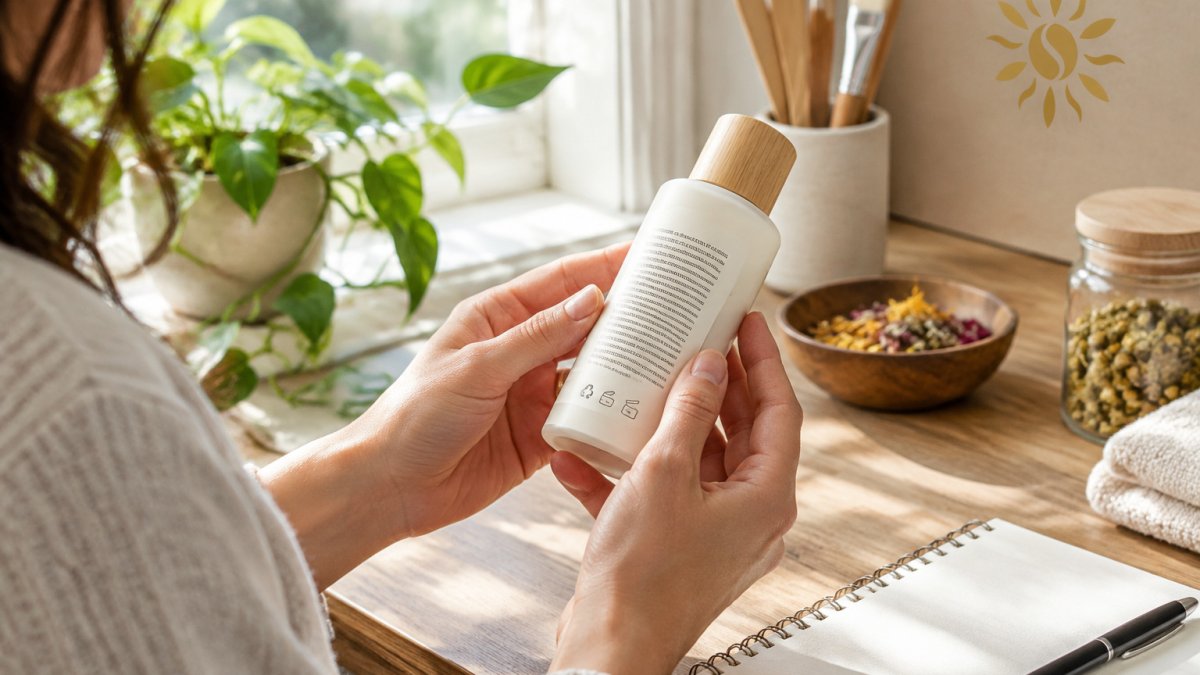
Start by scanning the first five to seven ingredients, since these usually account for most of the product. Then look for the words "fragrance" or "parfum," which can conceal dozens of undisclosed compounds. A brand that publishes its complete INCI list, as Soulari Naturals does, lets you check every entry rather than relying on front-of-pack claims.
Watch out: a long list of "free from" claims on the front of a bottle tells you what the brand chose to exclude, not whether the formula is well made. Compare the full ingredient list instead.
Organic Skincare Certification Explained
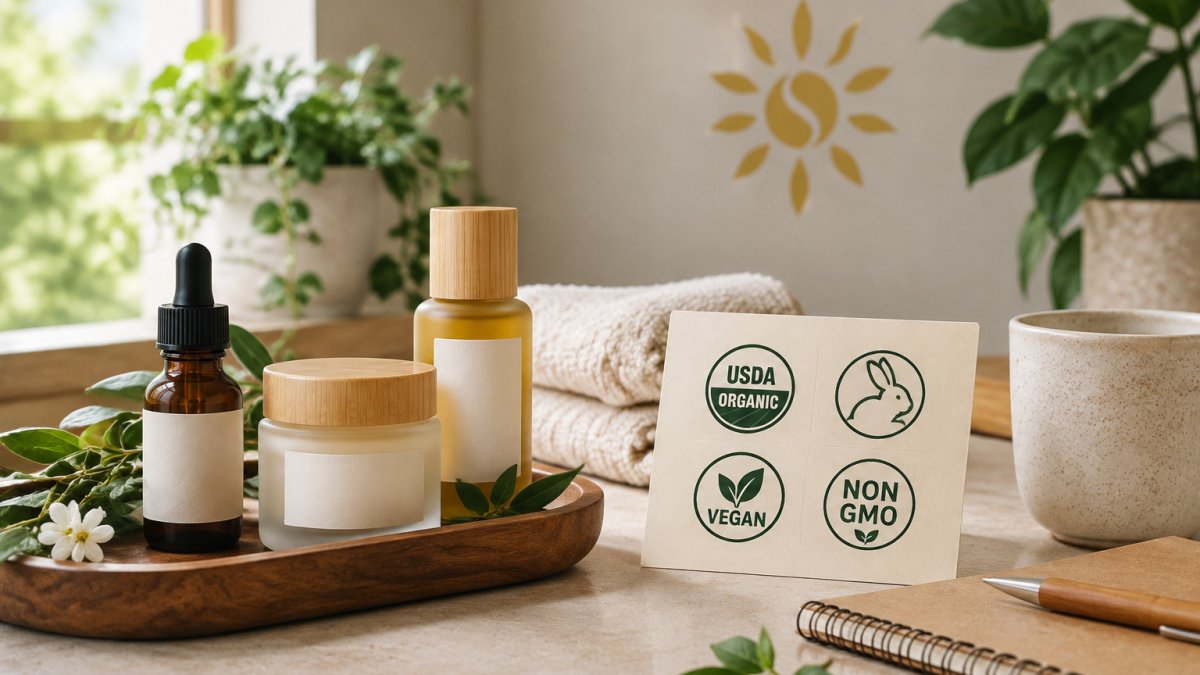
Organic certification is one of the few labels in beauty backed by an established legal framework.
Organic claims are not all equal. A product may use "made with organic ingredients" while meeting a lower threshold than a fully certified product, so check the exact wording on the label. Certification also covers only the ingredients it examines, which is why reading the full list still matters.
Cruelty-Free Skincare Certification and What It Covers
Cruelty-free certification addresses animal testing, not ingredient safety. Cruelty-free certifications vary in their requirements, so check each program's published standard.
It is worth knowing that a cruelty-free label says nothing about whether a formula is vegan or what it contains. A product can be cruelty-free and still include animal-derived ingredients, so read the label for both claims if they matter to you.
Clean Standards and Ingredient Certifications Compared
Different certifications answer different questions. Organic certification speaks to how ingredients are grown, cruelty-free certification speaks to testing, and clean standards speak to which ingredients a brand excludes. Some brands combine several, while others rely on a single self-defined standard.
| Certification type | What it checks | Best used to confirm |
|---|---|---|
| Organic | How ingredients are farmed and processed | Agricultural origin |
| Cruelty-free | Animal testing by brand and suppliers | Testing policy |
| Clean (self-defined) | Excluded ingredient lists | Brand's own exclusions |
CertClean, for example, requires products to be verified free from more than 1,400 potentially harmful ingredients, according to CertClean certification standards. Standards like this are useful only when you can see which list applies to the product in your hand.
Greenwashing in Beauty and How to Spot It
Greenwashing happens when a brand uses environmental or wellness language that its formulas do not support. Because "clean" is unregulated, the term is easy to stretch, and vague phrases like "natural," "pure" or "non-toxic" give little real information on their own. The 2026 standard increasingly expects complete ingredient transparency and independently verified sourcing, as described in Iero Beauty's 2026 industry trends overview.
To spot greenwashing, check whether a claim names a specific certifier, whether the full ingredient list is published, and whether sourcing is explained rather than implied. A brand that cannot point to a verifiable standard should be read with caution.
Checking Soulari Naturals' Standards Before You Buy
Before you buy from any brand, including ours, check three things: the full INCI list, the certifications it names, and how it explains sourcing. Our guide to researching ethical beauty supply chains explains how to verify sourcing claims yourself. At Soulari Naturals, every product carries a complete ingredient list, and our botanical clean standard is described in plain terms so you can compare it with other options.
If you want a practical method for checking any brand, our How to Tell If a Skincare Brand Is Truly Clean: A 6-Step Checklist walks through the same steps. For a concrete example of a simply formulated product, our Grass-Fed Tallow & Honey Balm lists its short, readable ingredients in full, and our Daily Miracle Moisturizer shows how a lightweight everyday formula can fit into a simple routine.
Clean beauty certifications explained for beginners come down to one habit: read the full list, understand what each certification actually covers, and treat vague language as a prompt to look closer. When you know what to check, the labels become far easier to trust.
Frequently Asked Questions
What does clean beauty mean?
Clean beauty is a marketing term rather than a regulated one. Brands use it to describe products that leave out certain ingredients, such as some preservatives or synthetic fragrances, but no single government definition exists. Because the term is not regulated, the meaning varies from brand to brand. The practical approach is to read the full ingredient list and check which specific certifications a brand holds, instead of relying on the word clean on the front of the package.
Are clean beauty products officially certified?
Not automatically. Clean beauty itself has no official certification. Some third-party programs verify that products are free from a defined list of ingredients. A product labelled clean may or may not carry one of these checks, so look for the named certifier and confirm it on the certifier's own website.
Does cruelty-free mean a product is vegan?
No. Cruelty-free means the product and its ingredients were not tested on animals, typically under a defined testing policy. Vegan means the product contains no animal-derived ingredients at all, such as beeswax, lanolin or carmine. A product can be cruelty-free and still contain animal-derived ingredients, and a vegan product can still be tested on animals where regulations require it. Check each claim separately.
How can I tell if a clean beauty claim is greenwashing?
Look for specifics. A brand that makes a clean claim should be able to name the standard it meets, list every ingredient in full, and point to independent verification. Be cautious of vague wording such as natural-inspired or eco-conscious without a named certifier, and of claims that are impossible to check. Critics also note that some clean claims ignore the safety and preservative benefits of ingredients like parabens, so a claim that avoids an ingredient without explaining why deserves a closer look.
What does an ingredient certification actually verify?
It depends on the certifier. Some check that a product's ingredients meet a defined exclusion list, while others verify organic farming practices, sourcing, or that no animal testing took place. Each certification covers a specific scope, and none covers everything. Read the certifier's published standard to see exactly what is checked, and whether the check applies to the finished product or only to certain ingredients.
How do I check a skincare product's ingredients and certifications?
Start with the full INCI list on the packaging or the brand's website, which shows ingredients in descending order of concentration. Then look for the certification logo and search the certifier's public database to confirm the product is listed. If a brand says it is certified but cannot show a certificate number or listing, treat the claim as unverified and contact the brand directly.
Which certifications should I look for in skincare?
Choose certifications based on what matters to you. Organic certifications cover how ingredients are farmed, cruelty-free certifications cover animal testing, and clean standards cover which ingredients are excluded. For a product from Soulari Naturals, check its published ingredient standard and full INCI list on the brand website for current details before buying. Pricing depends on the product and quantity, so check the website for current prices.