 blog
Which Skincare Promotes Balanced Energy and Verified Results?
Quick Summary
Balanced energy skincare is a routine built to keep skin looking calm, hydrated and even rather than stressed. For verified results, look for ingredient certification, clinical testing of the finished product, and specific, testable claims rather than vague promises.
- Balanced routines focus on gentle cleansing, consistent hydration, and ingredients that avoid irritation.
- Introduce one new product at a time and wait a week before adding the next.
- Certification such as EWG Verified reviews ingredients but does not test the finished formula.
- Clinical testing shows what the finished product actually did on skin.
- Most visible hydration and texture changes take several weeks of steady use.
Table of Contents
- What Balanced Energy Means in a Skincare Context
- What Verified Skincare Results Actually Means
- Best EWG Verified Skincare: How the Verification Works
- Dermatologist-Recommended Skin Care Products: What the Recommendation Covers
- A Daily Skin Care Routine for Glowing Skin, Step by Step
- Dermatologist Recommended Skin Care Routine for 50s and Results Timelines
- Choosing Your Next Step: Shop Soulari Naturals or Compare Your Options
- Frequently Asked Questions
What Balanced Energy Means in a Skincare Context
Balanced energy skincare is a routine built to support skin that looks calm, hydrated and even rather than stressed or overworked. Soulari Naturals offers botanically formulated products and supplements designed for whole-body vitality. The phrase is a marketing and wellness idea more than a clinical measure, so it helps to define it clearly before shopping.
In practice, a balanced routine tends to focus on three things: gentle cleansing, consistent hydration, and ingredients that do not provoke irritation. Many people with sensitive or combination skin find that fewer, well-chosen steps work better than a long list of strong actives.
Watch out: layering several new botanical products at once makes it hard to tell which one caused a reaction. Introduce one product at a time and wait a week before adding the next.
What Verified Skincare Results Actually Means
Verified results are measurable outcomes that can be checked against evidence, not simply claims on a label. For skincare, that usually means clinical testing, dermatologist evaluation, or independent certification. The research on routines supports this: a clinical comparison of a multi-step skincare routine against a routine with fewer products reported on the benefits each delivered, according to Clinical Confirmation: Multi-Step Routines Deliver Better Benefits to Skin.
Be cautious with broad promises. Skincare claims are meant to describe appearance, not internal biological change, a distinction that The Eco Well's guide to skincare claims makes clearly, as set out by The Eco Well, A 101 guide to skincare claims. Look for specific, testable language and treat vague words such as "detox" or "transforms" with skepticism.
Best EWG Verified Skincare: How the Verification Works
EWG Verified is a third-party program run by the Environmental Working Group. It reviews a product's full ingredient list against the organization's health and safety criteria, and products that meet them can carry the badge. For shoppers comparing options, it is one useful filter, but it is not a guarantee that a product will suit your skin, and it is not the same as clinical testing of the finished formula.
To use the badge well, separate three different kinds of evidence. First, certification: EWG Verified, COSMOS Organic, or similar seals confirm that an ingredient review was done against a published standard. Second, clinical testing: patch tests, dermatologist evaluation, or instrument-measured hydration and texture changes confirm what the finished product did on skin. Third, consumer reviews: useful for texture, scent, and packaging, but not proof of efficacy. A product can carry a certification and still lack clinical data, and a product can have clinical data without any certification. The strongest listings show both.
When you compare products, work through the same checklist every time: full INCI list, fragrance-free or fragrance position, presence of known irritants for your skin type, verification status confirmed on the official database rather than packaging alone, and whether the brand publishes any finished-product testing. A common pattern is that budget-friendly verified products often skip clinical testing, while clinical-tested products often skip third-party certification, so decide which evidence tier matters most to you before you shop.
Watch out: a badge on a product page can be outdated or applied to a different formula version, so confirm the exact product name and version in the official database before relying on it.
The article separates three kinds of evidence behind a skincare claim, which can be compared at a glance.
| Evidence type | What it confirms | Limitation |
|---|---|---|
| Certification (e.g., EWG Verified) | Ingredient review against a published standard | Does not test the finished formula |
| Clinical testing | What the finished product did on skin | Not implied by a certification |
| Consumer reviews | Texture, scent, packaging | Not proof of efficacy |
Dermatologist-Recommended Skin Care Products: What the Recommendation Covers
A dermatologist recommendation usually means a professional has reviewed the product for a specific purpose, such as sensitivity, barrier support, or acne-prone skin. It does not mean the product works for everyone, and it does not automatically mean the dermatologist examined your skin. Dermatology reviews of common concerns such as wrinkles and sensitivity, including work by K. Rodan and coauthors in 2016, emphasize matching products to the concern and the skin type, as described in Skincare Bootcamp: The Evolving Role of Skincare.
Recommendations come in several forms, and they are not equal. A general educational recommendation, where a dermatologist explains which ingredient classes suit a concern, is different from a brand partnership, where a professional is paid to endorse a specific product, and different again from a clinical recommendation made after examining your skin. Ask which one you are looking at.
To evaluate a recommendation, check four things: whether the dermatologist's specialty and credentials are stated, whether the recommendation names a specific concern and skin type, whether the product's ingredient list supports that concern (for example, ceramides and niacinamide for barrier support, or fragrance-free formulas for reactive skin), and whether any finished-product testing is published. A recommendation that names no concern, no skin type, and no ingredient rationale is marketing, not guidance.
Watch out: a recommendation made for one skin type can be actively unhelpful for another, so treat any expert endorsement as a starting filter rather than a final answer, and patch-test new products before adding them to a full routine.
A Daily Skin Care Routine for Glowing Skin, Step by Step
A simple daily routine for glowing skin has four steps: cleanse, treat, moisturize, and protect. Use a gentle, non-stripping cleanser in the morning and evening. Add a lightweight facial oil after cleansing if your skin feels dry. Finish with a daily face cream, and use sunscreen during the day.
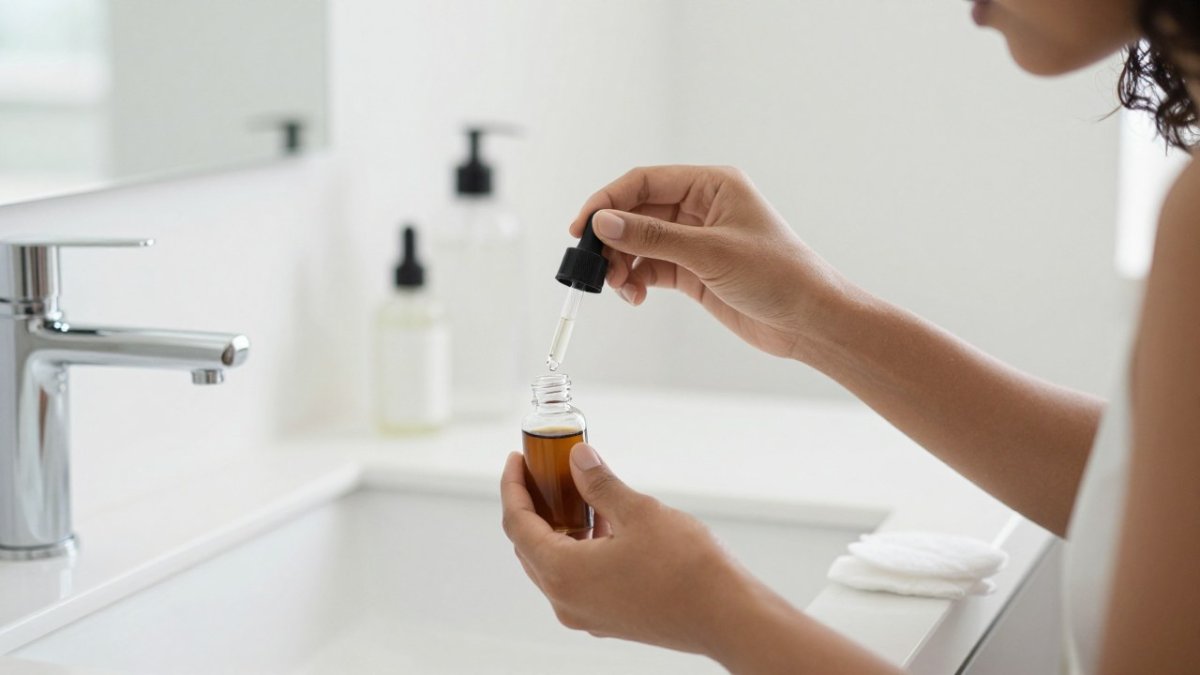
Apply thin layers and let each one absorb before the next. Overloading the skin is one of the most common reasons routines feel irritating rather than soothing.
Dermatologist Recommended Skin Care Routine for 50s and Results Timelines
Skin in its 50s often needs more hydration and barrier support. Readers in their 50s should choose products formulated for their stage of skin rather than assuming one set fits all. Results depend on consistency: most visible changes in hydration and texture take several weeks of steady use, while anything promising overnight change deserves caution. Track your skin with photos every two to four weeks so you can judge progress honestly.
Choosing Your Next Step: Shop Soulari Naturals or Compare Your Options
Choosing the right products comes down to your skin type, your sensitivities, and how much evidence you want behind each claim. Soulari Naturals offers botanically formulated skincare and supplements with full INCI lists, so you can check every ingredient before you buy. For the internal side of the routine, read our guide on choosing between internal and external skincare and our breakdown of verifying clean ingredients in whole-body vitality supplements. When you are ready, shop our skincare collection and check current pricing on the Soulari Naturals website, as prices depend on quantity, dates, and delivery.
Frequently Asked Questions
What does EWG Verified mean for skincare?
EWG Verified is a certification from the Environmental Working Group for personal care products that meet its ingredient review standards. It is one signal among several, not a guarantee of results. When evaluating any clean skincare product, including Soulari Naturals, check the full INCI list yourself, confirm which claims are backed by a named certification, and look for independent testing rather than relying on the word clean alone. Verification tells you about ingredient screening, not how well a product will perform on your skin.
Can skincare products support balanced energy, or is that mainly influenced by diet and lifestyle?
Skincare products act on the skin's surface and barrier, so they do not directly change energy levels. Balanced energy is shaped mainly by sleep, nutrition, stress, movement and hydration. Some people following a holistic routine find that a consistent, gentle skincare ritual supports a calmer evening habit, which can contribute to how rested they feel. Soulari Naturals positions its botanical skincare and supplements as part of a whole-body approach, but any energy benefit should be treated as lifestyle support rather than a direct product effect.
How can I tell whether a clean skincare product is suitable for sensitive skin?
Start by reading the full INCI list, which shows every ingredient in descending order of concentration. Look for fragrance-free formulas, and be cautious with essential oils, which can irritate reactive skin even when they are natural. Patch test any new product on the inner forearm or behind the ear for several days before using it on your face. Research on product-related irritation is limited, so treat the results of your own patch test as the most reliable guide. If you have a history of reactions, a dermatologist can help you identify specific triggers.
What is a simple daily skin care routine for glowing skin?
A basic routine uses four steps: a gentle cleanser in the morning and evening, a hydrating moisturizer, and daily sun protection in the morning, plus a richer night moisturizer if your skin is dry. Apply products from thinnest to thickest and wait a minute between layers. Glowing skin usually reflects good hydration and barrier health, so consistency matters more than adding many actives. Results often take several weeks to become visible. Soulari Naturals offers botanical skincare that fits this kind of routine; current prices and product details are available on its website.